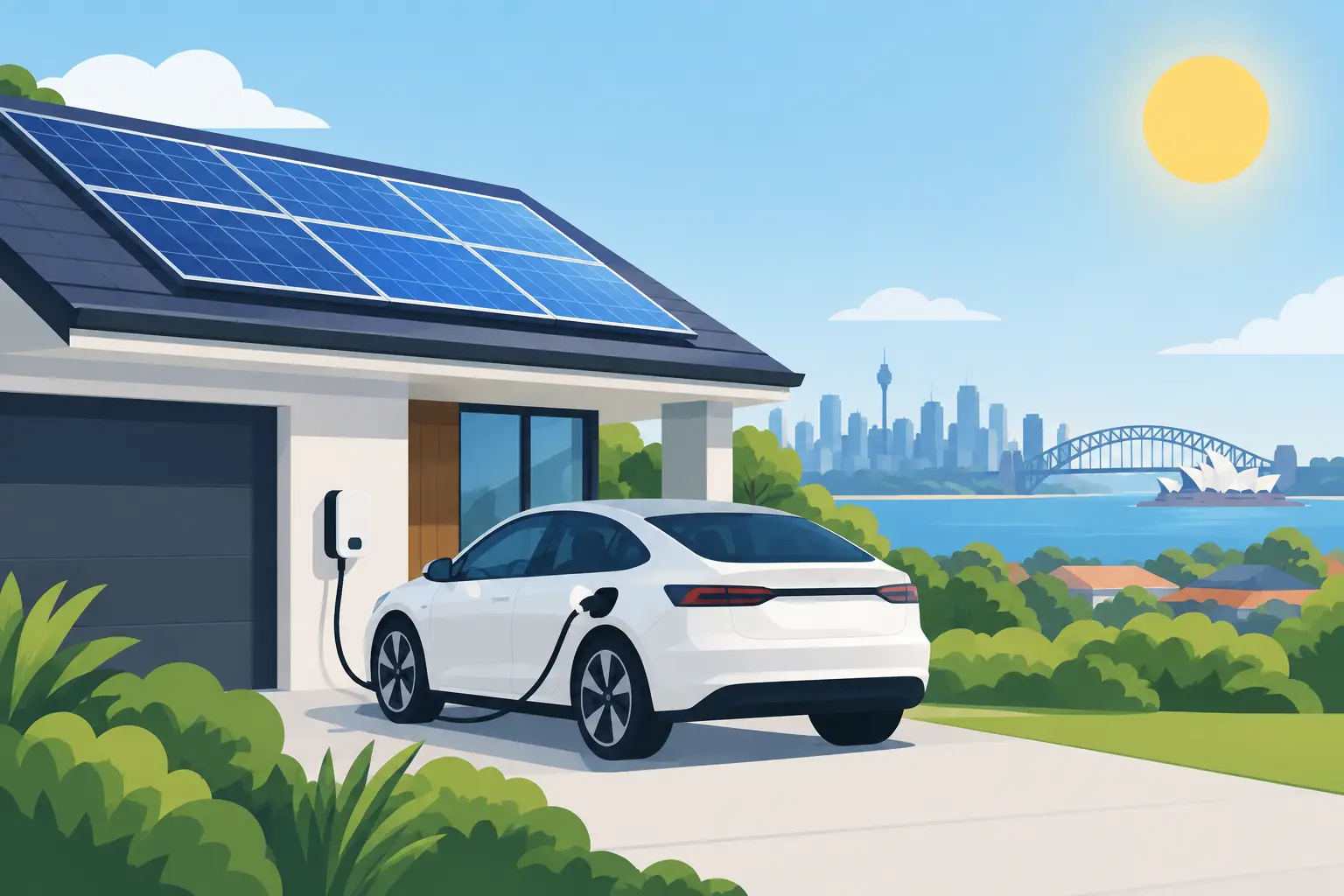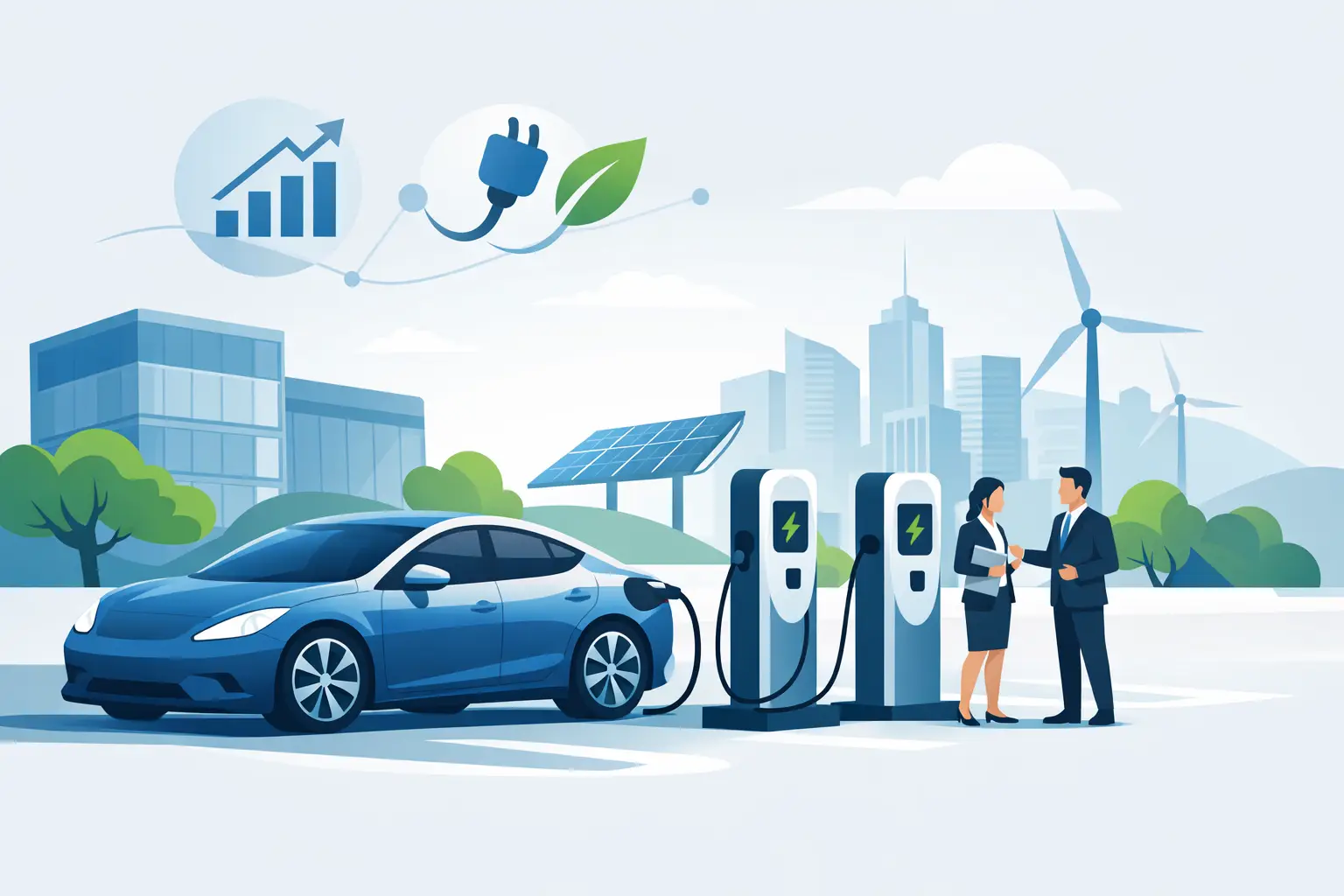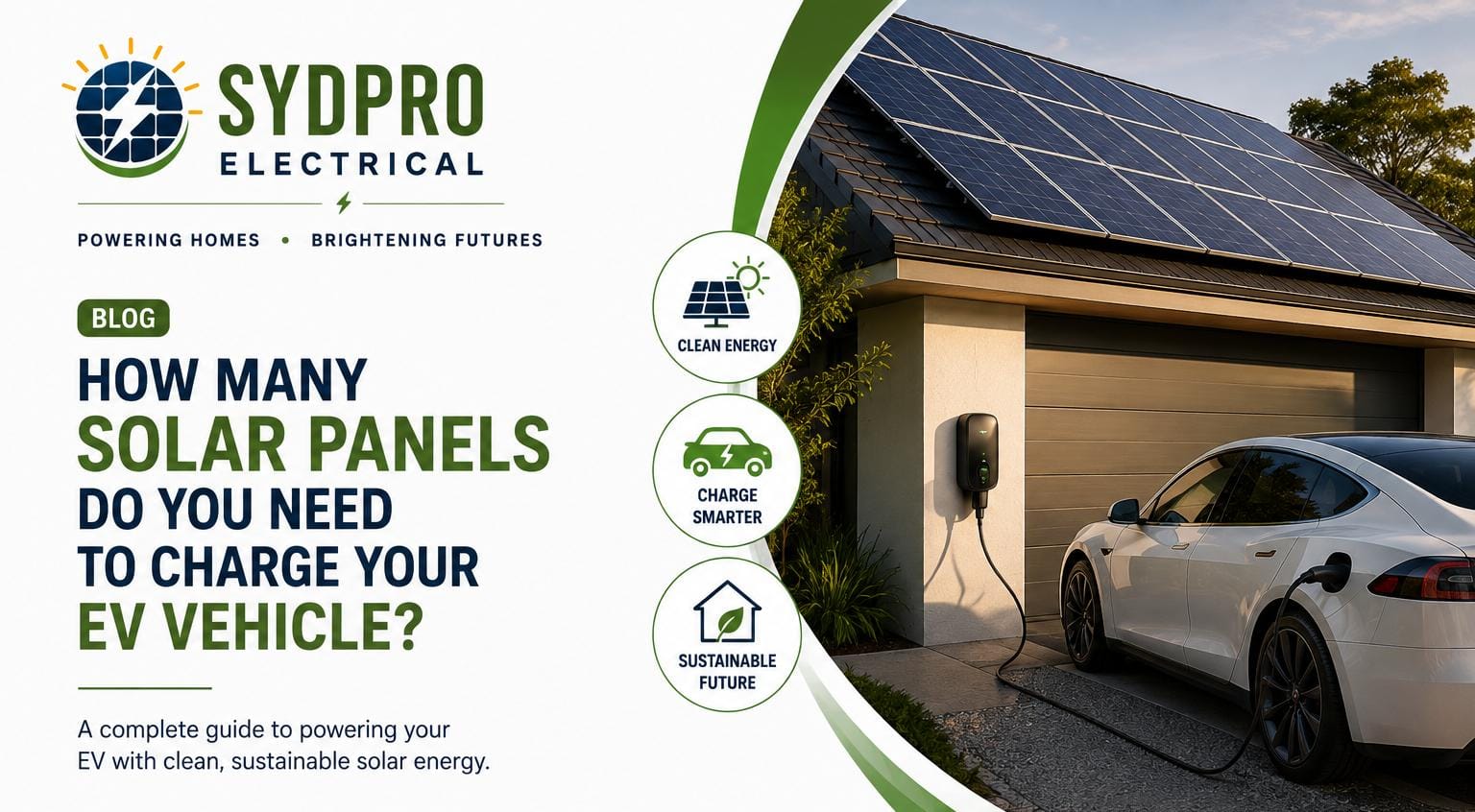
A public charger is useful when you are out. The charger at your home or workplace is what makes EV ownership easy every day. Knowing how to select EV charger equipment starts with your driving routine, your vehicle and the electrical capacity already available at the property – not simply choosing the highest kW number on the box.
For NSW homeowners, a correctly designed charger can turn excess rooftop solar into lower-cost kilometres. For businesses, it can support staff, customers or fleet vehicles without creating avoidable demand charges or electrical compliance issues. The right solution should be safe, convenient and ready for the way your energy needs may grow.
How to select EV charger charging speed
Most fixed home and business chargers are AC Level 2 chargers. They are considerably faster and more convenient than relying on a standard power point, but the best charging rate depends on two limits: what the property can supply and what the vehicle can accept.
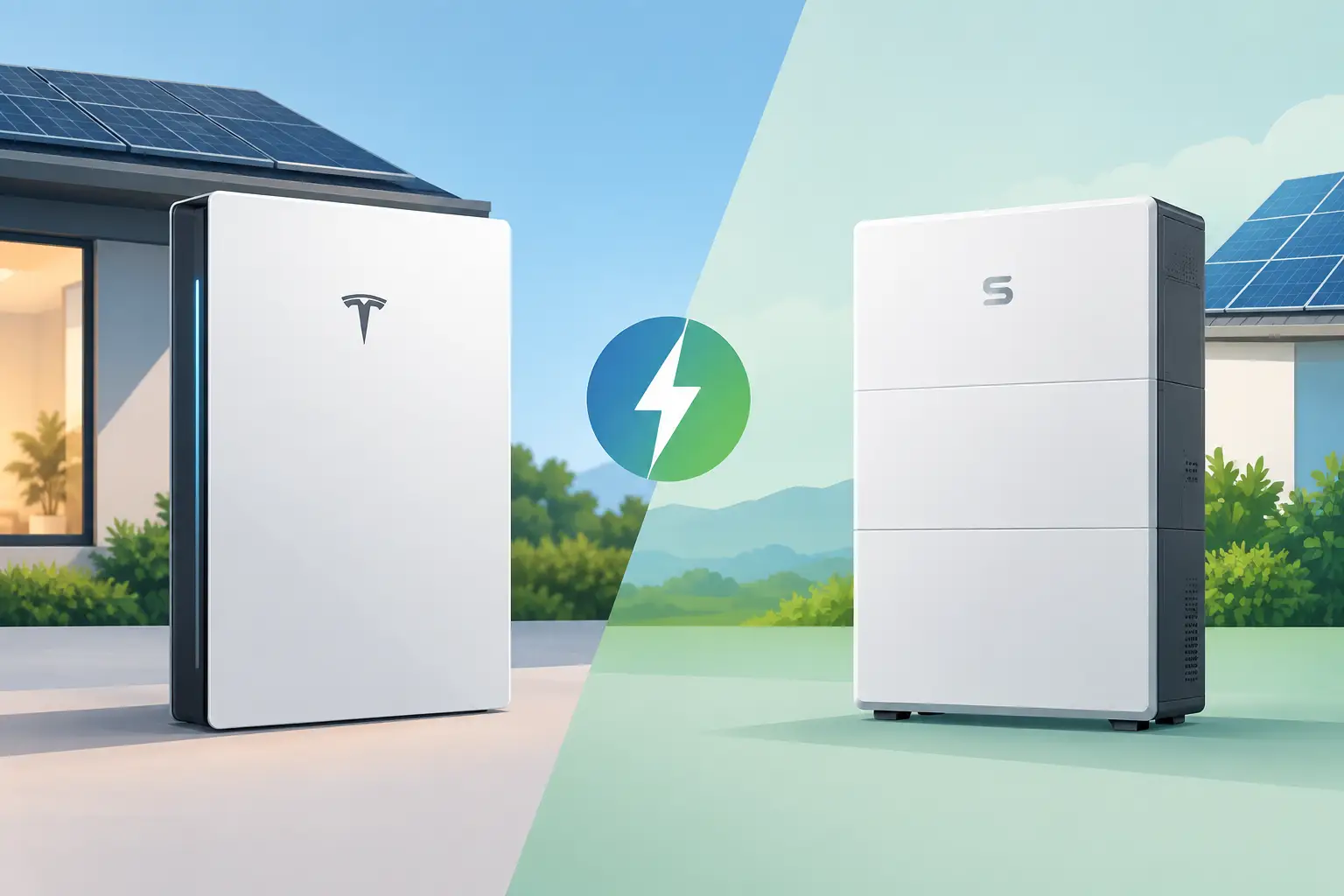
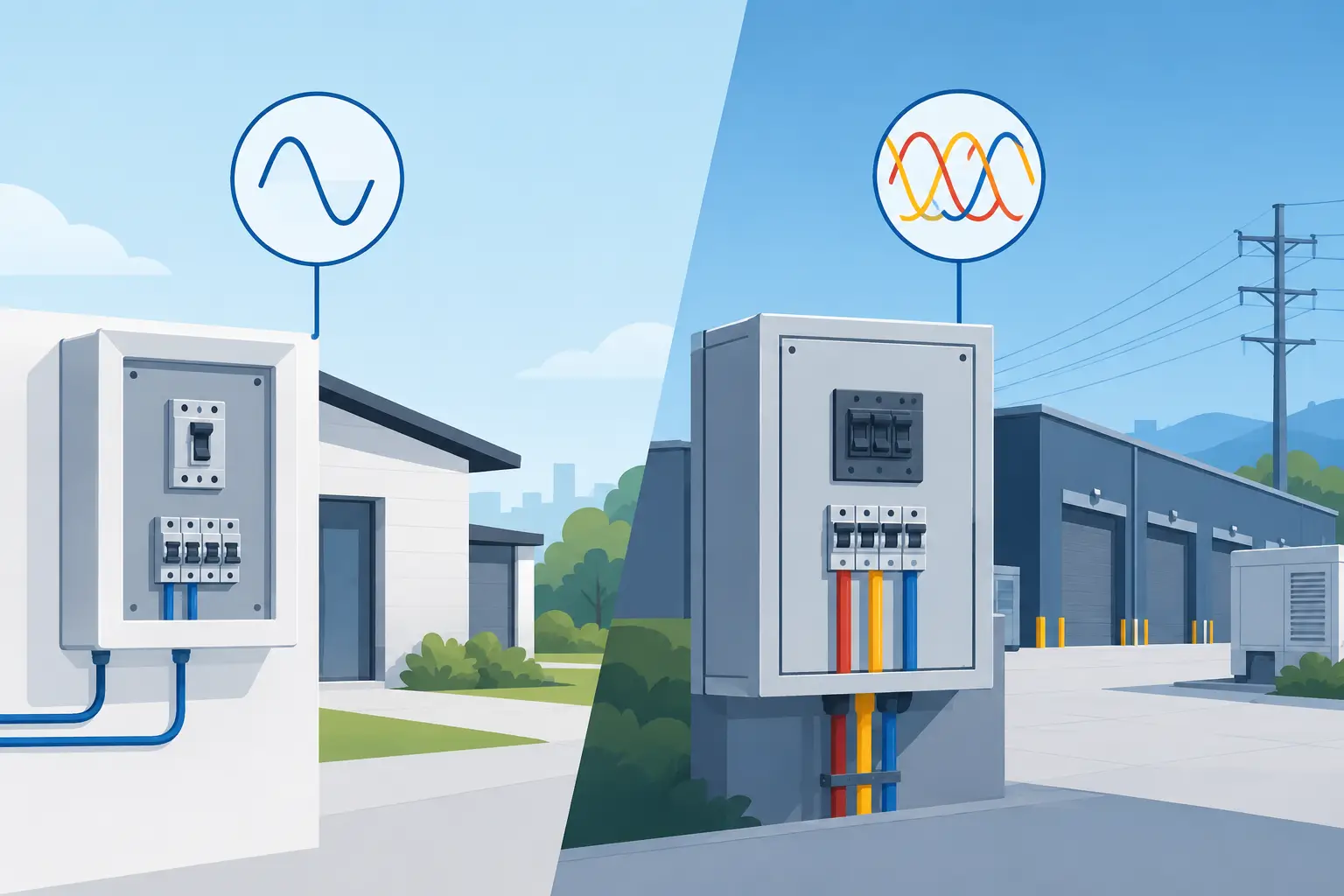
A 7 kW charger is often the practical choice for a single-phase home. It can add a meaningful amount of range during an overnight charge and suits many daily driving patterns. A 22 kW charger may be an option where three-phase power is available, but it is not automatically the better investment. Many EVs cannot accept 22 kW AC charging, even when the charger is capable of delivering it.
Before choosing a unit, check the vehicle’s maximum AC charging rate. This is different from its maximum DC fast-charging rate, which applies at public rapid-charging stations. A vehicle limited to 7 kW AC will not charge faster simply because a 22 kW wall charger has been installed.
Think about time rather than headline power. If your car is parked at home for 10 to 12 hours most nights, a 7 kW charger will meet the needs of many households. Higher capacity becomes more useful for properties with several EVs, vehicles returning between shifts, high-kilometre driving or a business fleet that needs predictable turnaround times.
Start with the property’s electrical capacity
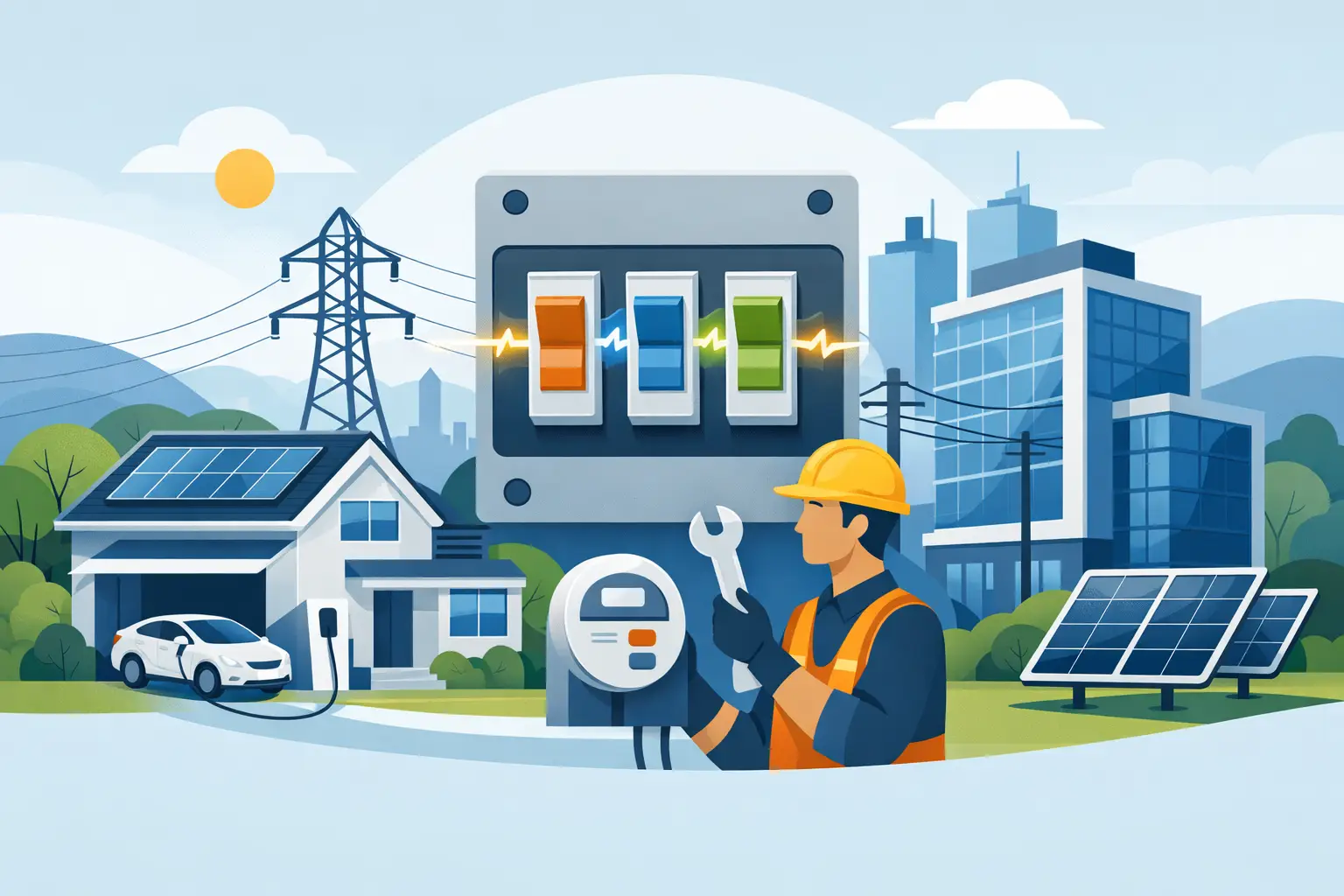
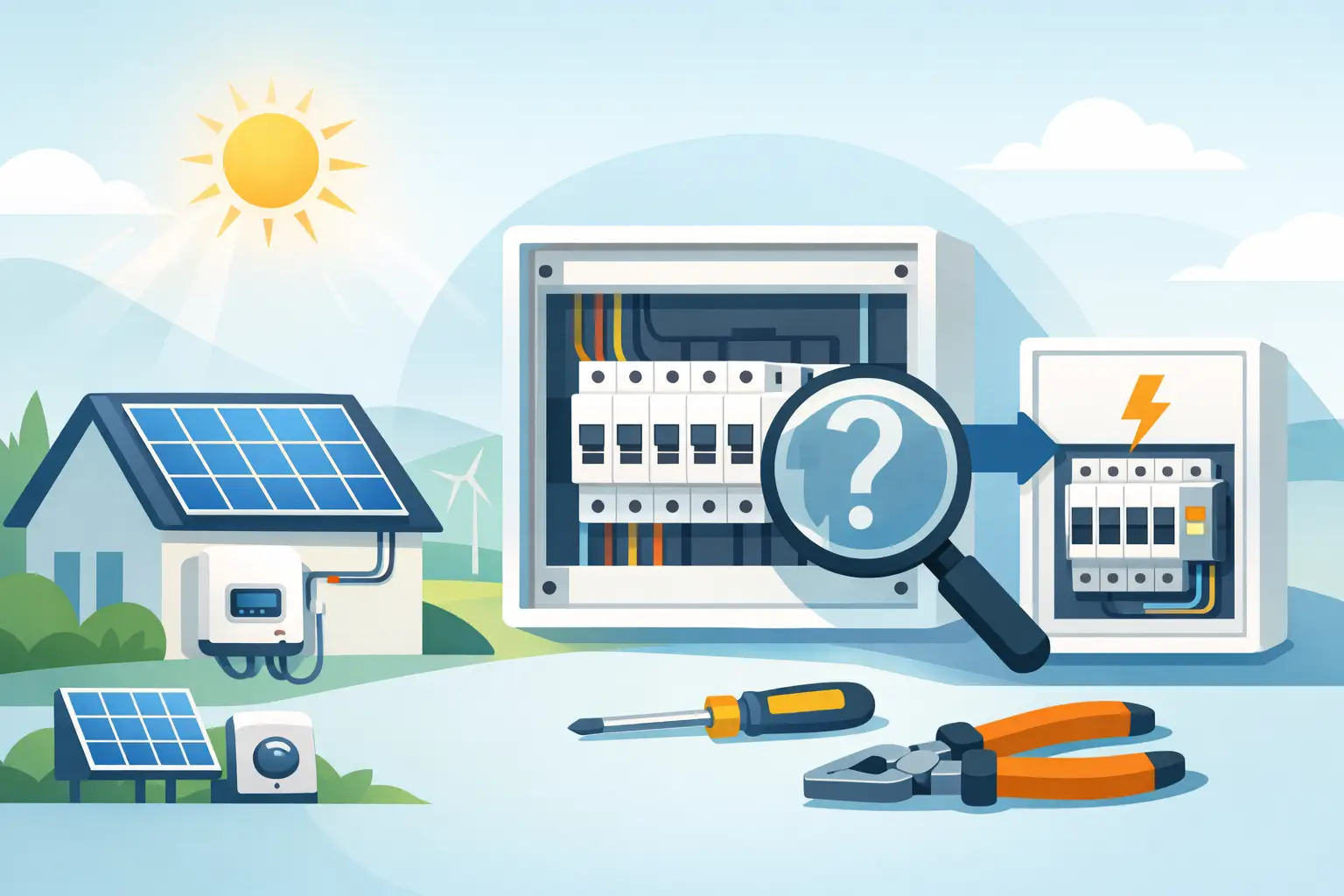
EV charging is a substantial and sustained electrical load. The switchboard, mains supply, existing appliances and connection type all need to be assessed before a charger is selected.
A typical household may already have solar, air conditioning, an electric hot-water system, induction cooking, pool equipment and a battery. Adding a charger without considering these loads can lead to nuisance tripping, constrained charging or an overloaded supply. An electrician should complete a load assessment to determine whether the existing infrastructure can safely support the charger at its intended setting.
For some properties, the answer may be simple: install a dedicated circuit and configure the charger to an appropriate current limit. Others may require switchboard upgrades, new protection devices, cabling works or a supply upgrade. Older homes and sites with limited mains capacity need particular attention.
Commercial sites require a broader view. Charging demand should be considered alongside operating hours, machinery, refrigeration, HVAC, tenant loads and future expansion. Installing several chargers at full capacity can be expensive if it forces a major network or switchboard upgrade. Smart load management can often allocate available power between chargers and reduce the need for oversized infrastructure.
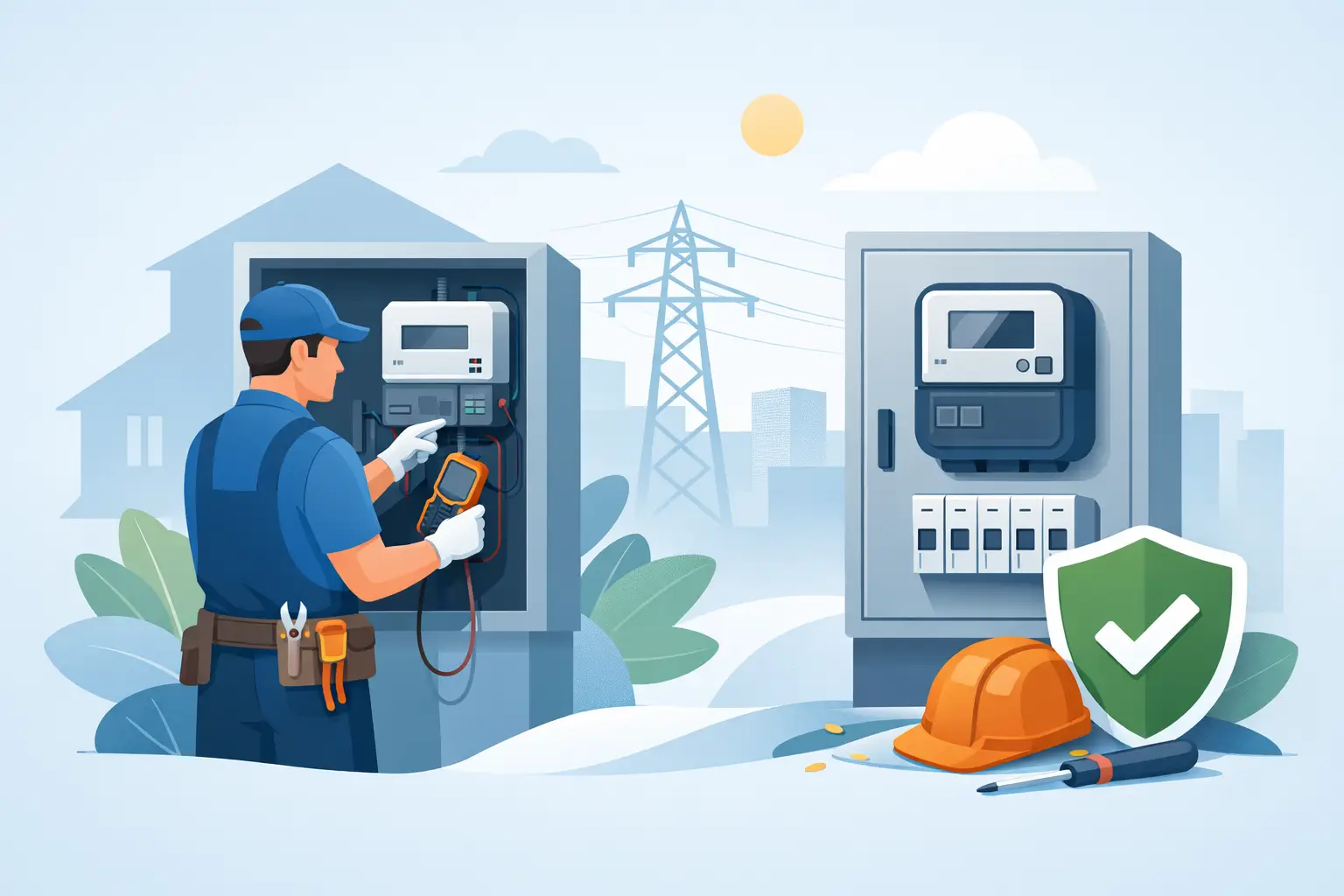
Where metering, service equipment or network connection work is involved, Level 2 authorised electrical capability matters. It helps ensure the work is planned around both the charging equipment and the regulated electrical requirements of the site.
Choose a charger that suits how you park
The physical installation location affects daily convenience as much as charging speed. Consider where the vehicle normally stops, which side its charge port is on and how the cable will be stored. A charger should be close enough to reach the vehicle without creating a trip hazard across a driveway, garage floor or shared access area.
A tethered charger has a fixed cable attached. It is usually the quickest option for regular home charging: park, plug in and charge. A socketed charger requires the vehicle’s own cable, which can suit households with different vehicles or owners who prefer a tidier wall-mounted unit. Neither is universally better. It depends on how many drivers use the charger and how important everyday convenience is to you.
If the charger will be outdoors, select equipment designed for Australian conditions and install it where the cable and connector are protected from unnecessary weather exposure, impact and vehicle damage. In apartment buildings, strata properties and workplaces, access control and cable routing deserve early attention. A good installation should work for users without obstructing parking bays, walkways or fire exits.
Make solar charging work in the real world
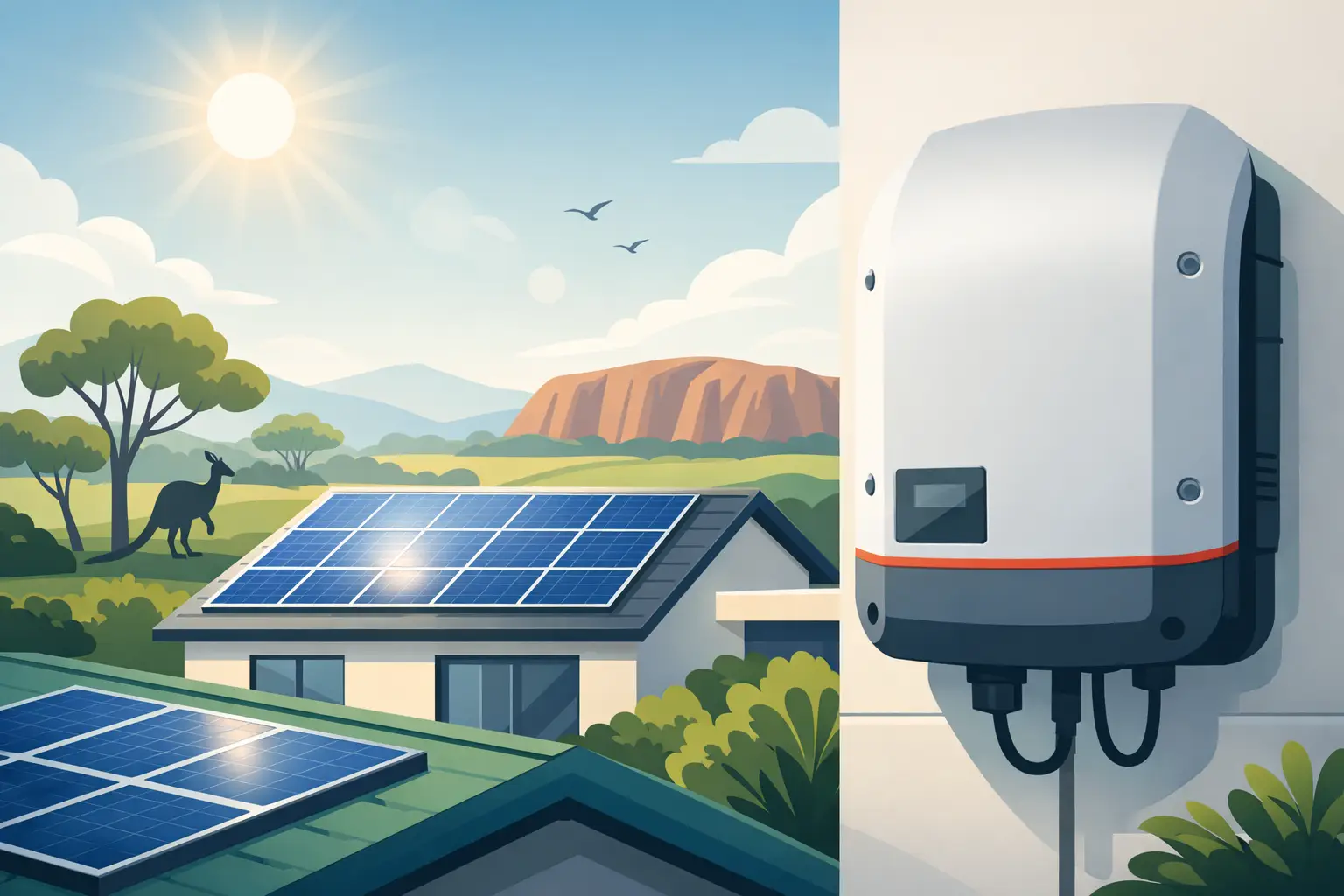
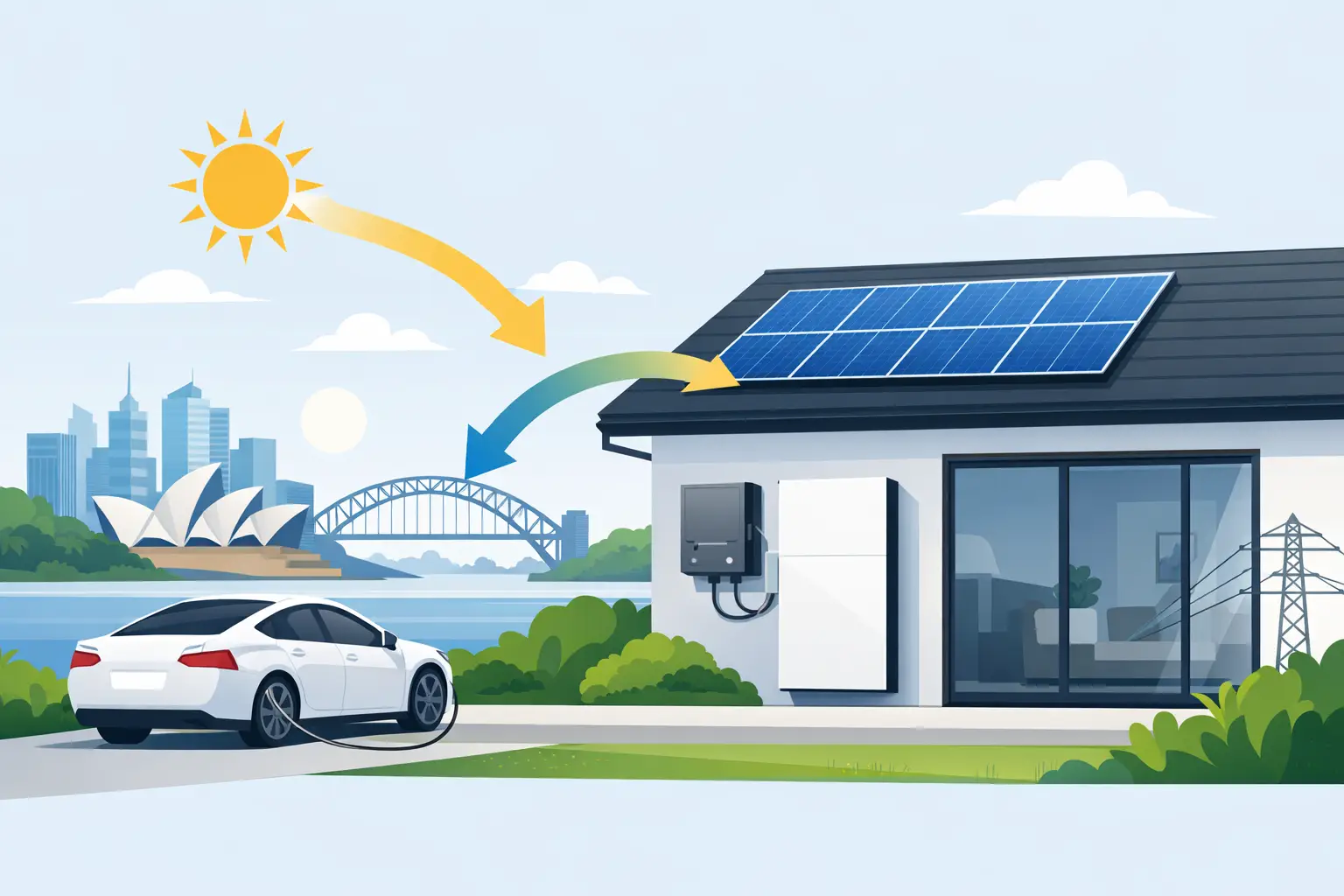
An EV can become one of the largest electrical loads in a solar-powered home. That makes solar-aware charging a valuable feature, particularly for households that are home during the day or businesses with daytime vehicle parking.
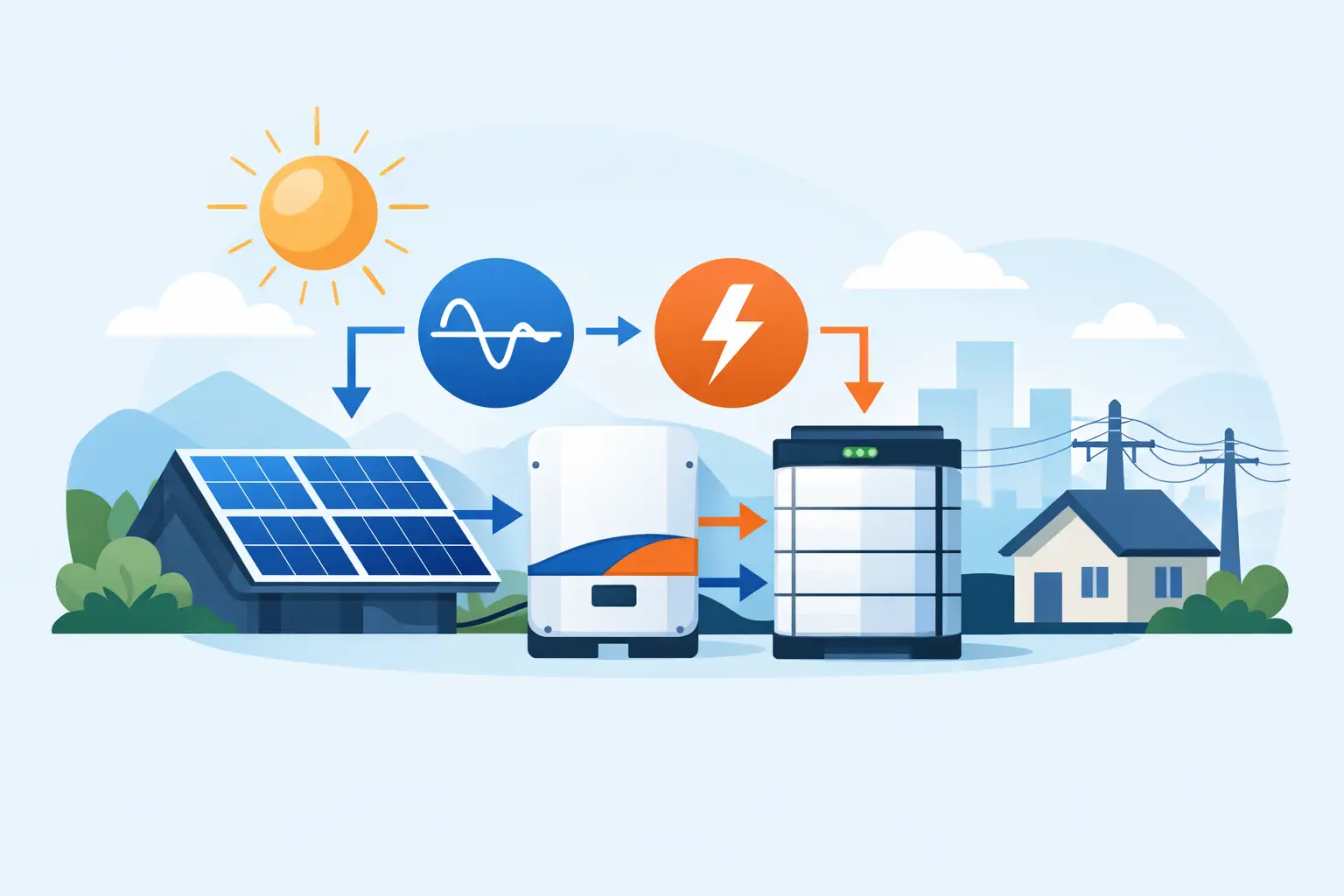
A smart charger can adjust charging in response to available solar generation, household demand and export limits. Instead of importing electricity at peak times, it may charge the EV when the solar system has surplus generation. The exact outcome depends on the size of the solar system, the weather, the vehicle’s connection time and how much electricity the building is using at that moment.
There is a trade-off. Solar-only charging can be slower or pause when clouds reduce generation. Scheduled charging may be more reliable when the car must be ready by a set time. The most useful systems allow both approaches: prioritise solar when there is flexibility, then schedule off-peak grid charging when a full battery is essential.
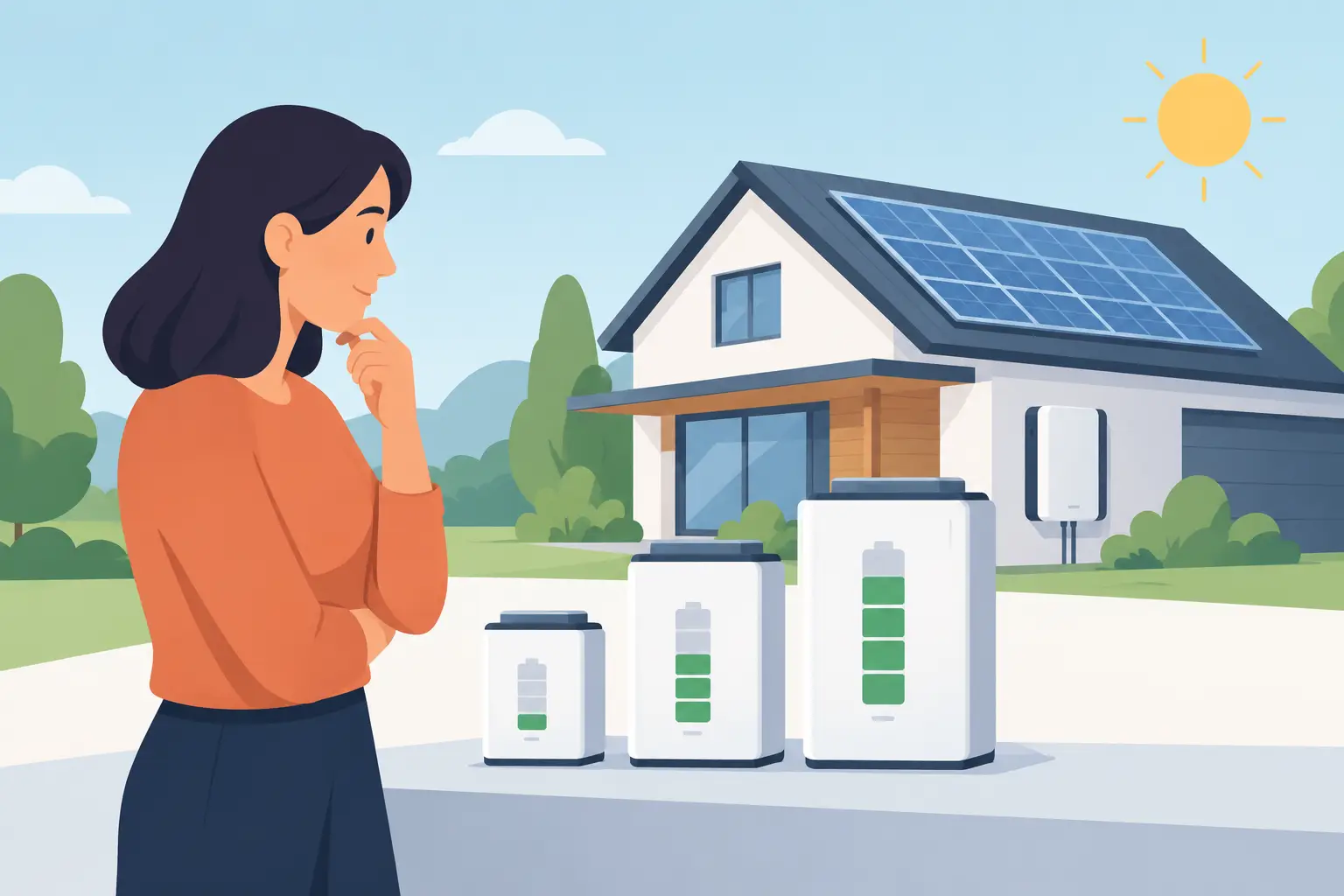
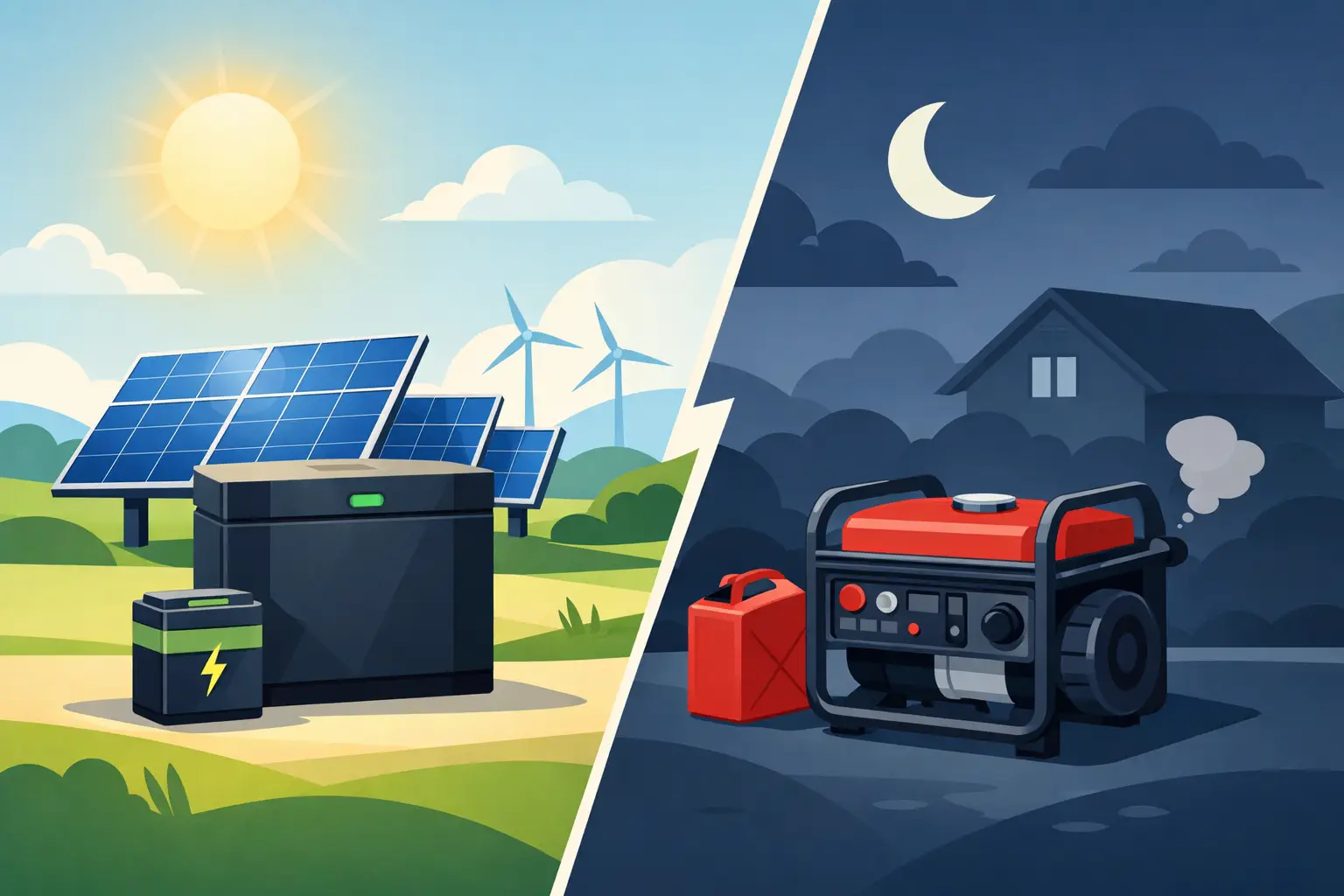
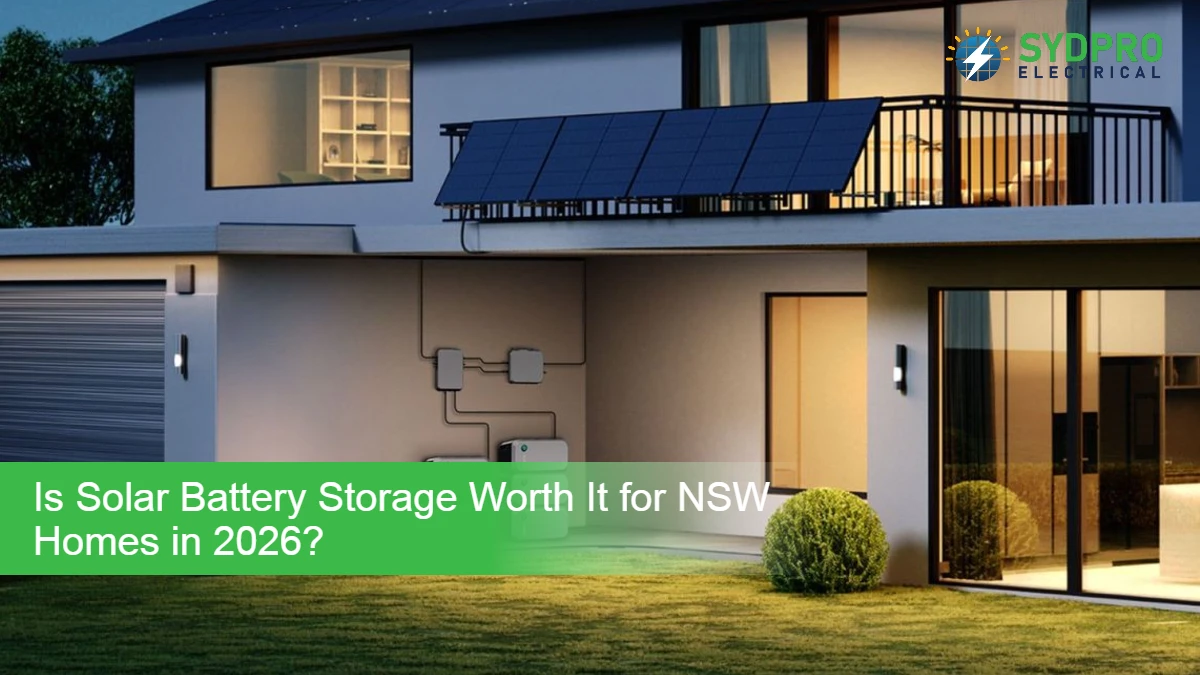
If you have, or plan to add, a battery, discuss the charging priorities during design. Some owners want solar energy to charge the home battery first for evening use. Others prefer the EV to absorb solar production during the day. There is no one-size-fits-all setting, because it depends on tariff structure, driving habits and the role the battery plays in household resilience.
Look for smart controls, not unnecessary complexity
Smart features can deliver real value when they solve a practical problem. Useful functions include scheduled charging, adjustable current limits, dynamic load balancing, energy monitoring and solar integration. These allow owners to manage charging around electricity tariffs and the property’s available capacity.
For commercial and multi-vehicle sites, consider user access, reporting and scalability. RFID access or app-based controls can help distinguish staff, visitors and fleet charging. Businesses may also need usage data for cost allocation, reimbursement or fleet reporting. If several chargers are planned over time, choose a system that can manage additional units rather than treating every new charger as a separate installation.
Avoid paying for features you will not use. A simple, reliable charger with the right safety protections and a clear schedule can be better value than a highly connected unit that does not integrate properly with the property or the owner’s routine.
Put safety, compliance and warranty support first
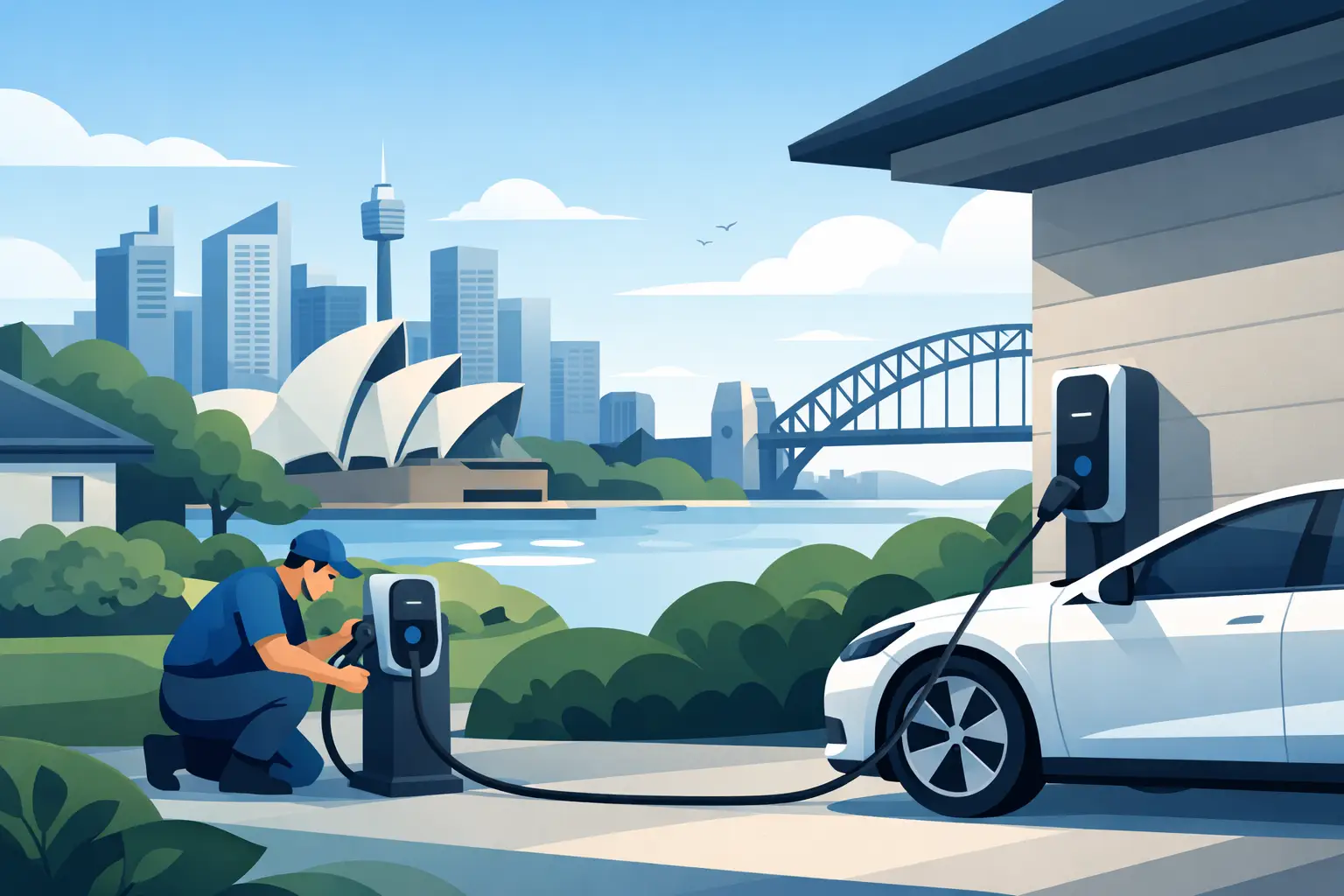
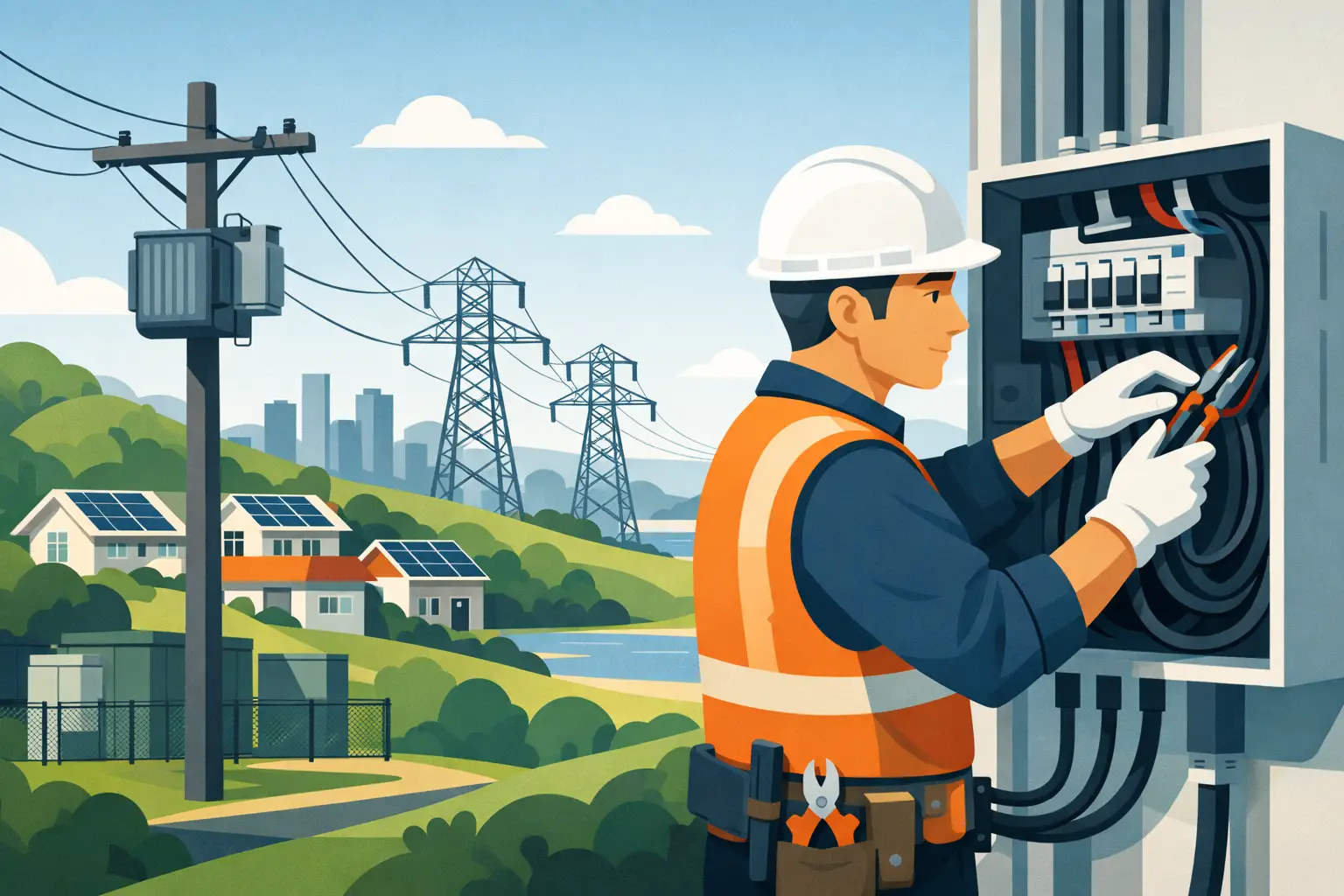
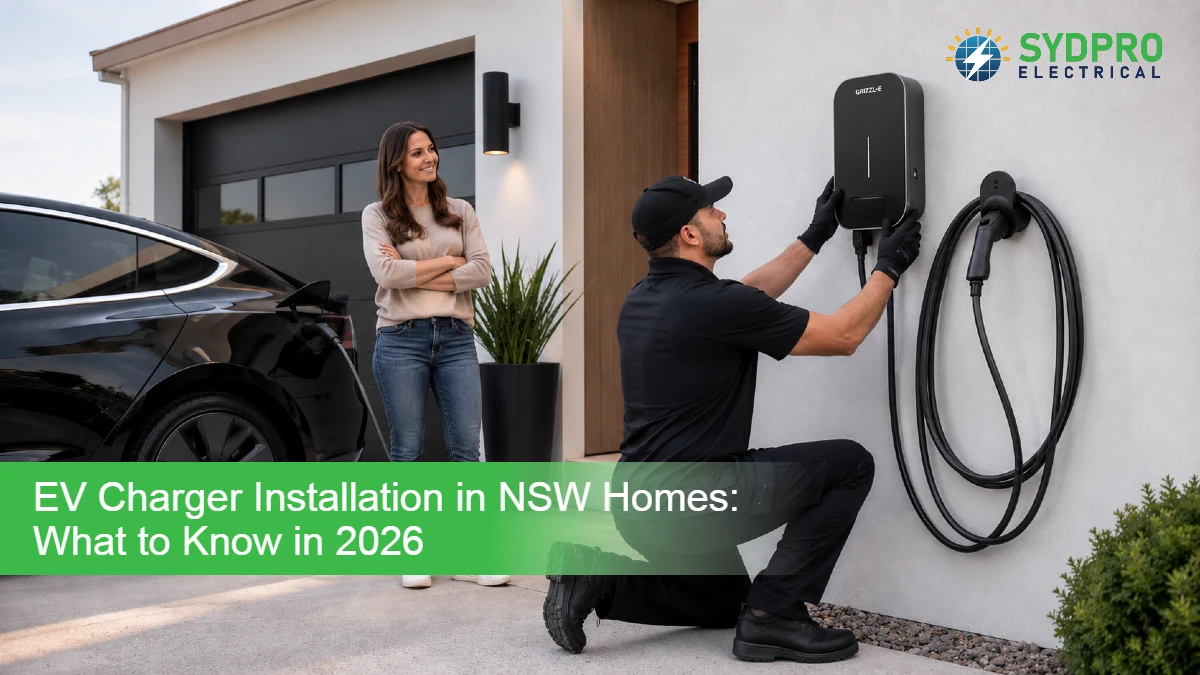
An EV charger should be installed on a dedicated circuit by a licenced electrician, with the required circuit protection, earthing and testing. Charger installation is not a DIY electrical project, and a standard socket outlet is not a long-term substitute for a purpose-designed charging solution.
The installer should assess cable sizing, maximum demand, switchboard condition, protection requirements and the manufacturer’s installation instructions. They should also provide electrical compliance documentation and explain the charger settings at handover. This is especially important when the charger is paired with solar, battery storage or energy-management equipment.
Product quality matters, but so does local support. Look at the manufacturer’s warranty, the availability of Australian technical assistance and whether replacement parts or service are accessible. A lower upfront price can lose its appeal if the charger is difficult to support after installation.
Sydpro Solar Solutions approaches EV charging as part of the wider energy system, considering solar production, battery storage, switchboard capacity and future electrical upgrades together. This integrated view helps prevent a charger decision from creating a costly limitation later.
Plan for the next vehicle, not just the current one
The charger should suit your current EV, but it is sensible to allow for change. Your next vehicle may have a larger battery, a different charge-port position or a higher AC charging capability. Your household may add a second EV, or your business may expand its fleet.
Future-proofing does not always mean installing the biggest charger now. It can mean installing suitable cabling, allowing switchboard space, selecting a charger with load-sharing capability or choosing an installation location that can serve additional bays later. These decisions are usually easier and more economical during the first electrical works than after walls, paving or landscaping are complete.
The best EV charger is the one that fits your vehicle, available power, parking layout and energy plan without compromising safety. Treat it as a long-term electrical upgrade, and it can make every kilometre simpler to run and easier to power with cleaner energy.