A warehouse roof can represent one of your site’s most valuable underused assets. But warehouse solar payback is not determined by roof area alone. The strongest returns come from matching generation to the way your business actually consumes electricity – across operating hours, machinery loads, refrigeration, lighting, offices and future expansion.
For NSW warehouse owners and operators, solar is often a practical way to reduce exposure to daytime electricity costs while making better use of a substantial roof footprint. The right system can lower operating expenses for decades. The wrong size, tariff assumptions or connection approach can leave value on the table.
What warehouse solar payback really measures
Solar payback is the estimated time it takes for electricity savings and other financial benefits to recover the upfront cost of a system. For a warehouse, the basic calculation is straightforward:
Installed system cost ÷ annual financial benefit = estimated payback period
The detail behind that annual benefit is where the real work sits. It includes the value of solar electricity used on site, export income for surplus generation, avoided network and retail charges where applicable, maintenance allowances, and any available incentives. It may also include demand-charge savings, but only where the tariff structure and system design support them.
A payback estimate should not be treated as a single promise. Electricity use changes, tariffs move, weather varies and businesses grow. A quality proposal should show the assumptions clearly, including expected annual production, self-consumption, export rates, electricity price escalation assumptions and the likely degradation of panels over time.
For many warehouse businesses, a well-designed system is valuable long after it reaches payback. That is why the better question is not simply, “How quickly will it pay for itself?” It is, “How much will this energy asset reduce our long-term cost of operating this site?”
The biggest drivers of warehouse solar payback
Daytime electricity use matters more than roof size
Warehouses are often well suited to solar because much of their electricity demand occurs during daylight hours. High-bay lighting, conveyor systems, compressors, forklifts on charge, office air conditioning and equipment loads can consume solar production as it is generated.
Every kilowatt-hour used directly on site generally has greater value than a kilowatt-hour exported to the grid. That is because self-consumed solar avoids buying electricity at your applicable retail rate, while export credits are usually lower. A warehouse operating mainly through the day may therefore achieve stronger savings from the same solar system than a site with most of its load overnight.
This is also why annual consumption alone is not enough. Interval data, ideally in 15- or 30-minute increments, shows when the site uses power. It lets designers assess how a proposed system will perform through the actual working day rather than relying on averages.
Tariffs and demand charges can change the numbers
Commercial electricity bills can be more complex than residential bills. Your rate may vary by time of use, seasonal periods, demand charges and network arrangements. A large system that reduces daytime energy purchases can be highly effective, but it will not automatically reduce every component of a bill.
Demand charges are a common example. If your warehouse is charged according to its highest demand in set periods, solar may help when the peak occurs during strong generation. If the critical peak is after sunset, early morning or driven by a short, high-load event, solar alone may have limited impact. Battery storage, operational changes or electrical upgrades may be worth assessing in that situation.
A credible payback assessment should use your current tariff and explain which bill components solar is expected to influence. Transparent modelling is more useful than an optimistic headline saving.
System size must fit the load profile
It is tempting to fill every available square metre of roof. Sometimes that is the right decision, particularly for energy-intensive operations with room to expand. Other times, an oversized system produces too much low-value exported energy and extends the payback period.
The best size balances roof capacity, daytime demand, future loads and connection limits. A warehouse planning to add EV chargers, increase production shifts, install more refrigeration or replace gas equipment with electric alternatives may sensibly design for future demand. Allowing for expansion during the initial electrical design can avoid unnecessary disruption and cost later.
A staged installation can also be a sound option. It allows a business to install capacity that suits current consumption, review performance, then expand once operational demand or fleet charging requirements are confirmed.
Roof condition and electrical infrastructure affect upfront cost
The solar modules are only one part of a warehouse project. Roof access, orientation, shading, structural capacity, switchboard condition, cable pathways, fire-safety requirements and the point of connection all affect project scope.
Older warehouses may require switchboard upgrades, metering changes or additional protection equipment before a larger solar system can be safely connected. If the site has a constrained grid connection, export limits may affect design choices. These are not reasons to avoid solar, but they must be identified before pricing is finalised.
This is where an integrated approach is valuable. Solar design needs to work with the building’s existing electrical infrastructure and distributor requirements. Level 2 ASP capability can be particularly relevant where metering, consumer mains, service equipment or grid connection work sits within the project scope.
Why cheap quotes can produce expensive payback assumptions
A low initial price can look compelling when comparing warehouse solar proposals. However, payback is shaped by production, safety, installation quality, warranty support and the accuracy of the financial model – not by the invoice total alone.
For a commercial roof, the design should account for module layout, access paths, roof penetrations or mounting method, shading from plant and nearby structures, inverter placement, isolator access and safe cable containment. Equipment selection also matters. Proven panels, inverters and mounting systems, paired with workmanship that meets Australian standards, protect the performance assumptions behind the business case.
Ask whether the proposal includes a clear production estimate, detailed exclusions, connection requirements and an explanation of export constraints. Fixed, transparent pricing is especially important when electrical upgrade work may be required. A quote that is vague about these items can make a short payback period look better than it really is.
Should a warehouse add a battery?
Battery storage can improve the value of solar, but it is not automatically the fastest route to payback. Its role depends on how your warehouse uses energy.
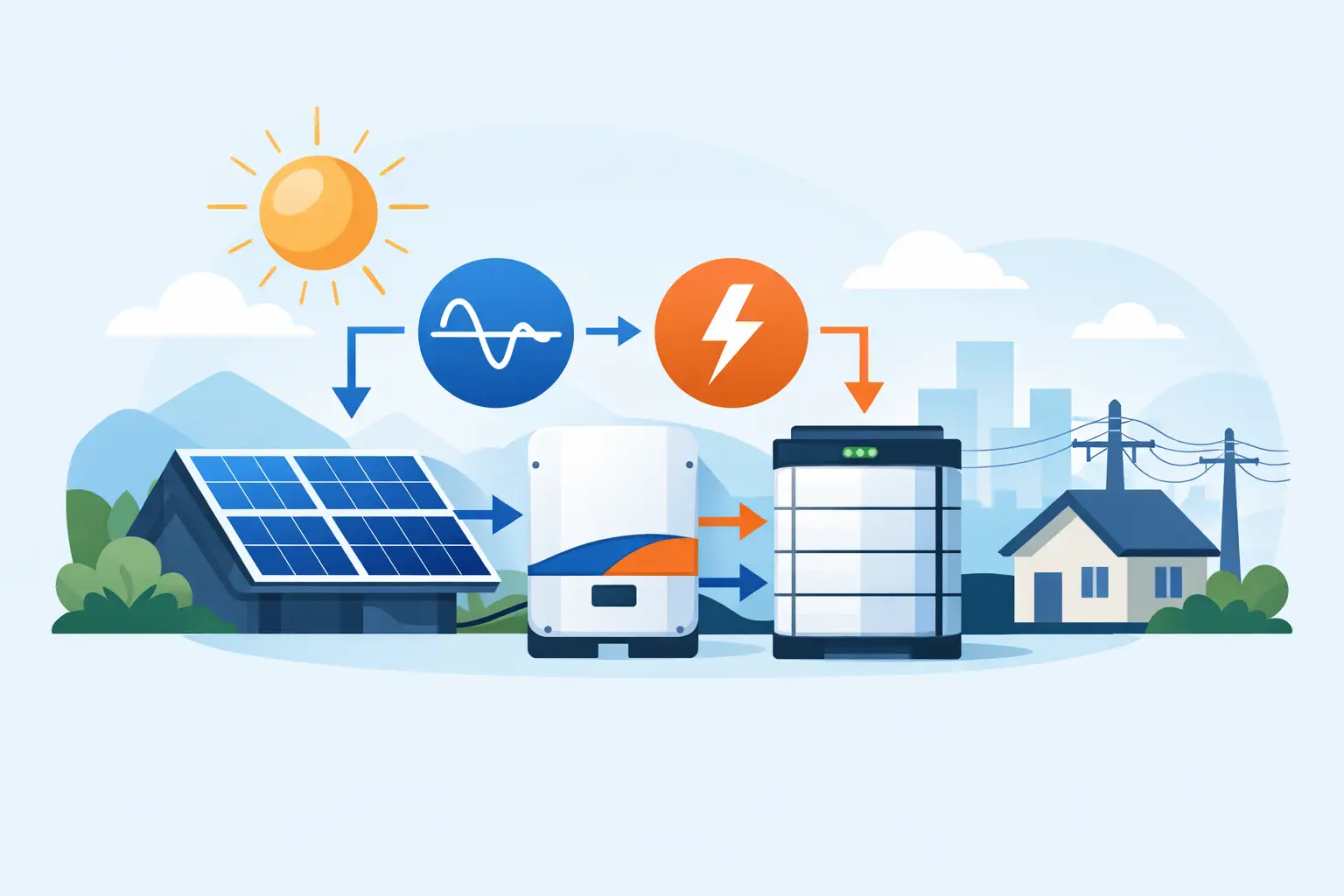
A battery may be worth considering when the site has significant late-afternoon or evening consumption, high demand charges, low-value exports, resilience requirements or planned EV charging. It can store surplus solar for later use and, with suitable design, reduce reliance on grid energy during higher-cost periods. For some operations, backup capability for selected critical loads also has genuine operational value.
For a warehouse with strong daytime demand and modest after-hours load, solar on its own may deliver the clearest first-stage return. The electrical system can still be designed with future battery integration in mind. This keeps the investment practical while preserving options as tariffs, operating hours and technology change.
Build a payback model you can trust
Before approving a warehouse solar project, gather at least 12 months of electricity bills and interval data where available. Include operational plans, such as new equipment, tenant changes, extra shifts, refrigeration upgrades or a future electric vehicle fleet. These details are often more valuable than another year of historical bills.
Your proposal should then show a sensible range of outcomes rather than relying on one perfect scenario. Consider lower and higher electricity-price assumptions, expected production, likely self-consumption and export limits. It should also identify the electrical work required to connect the system safely and compliantly.
At Sydpro Solar Solutions, this means assessing solar generation alongside the wider electrical infrastructure, not treating panels as a standalone purchase. Accredited solar design, quality equipment and regulated electrical work should support one clear outcome: a system that performs safely and delivers measurable value for the property.
The most useful next step is a site-specific assessment based on how your warehouse operates today and where it is heading next. When the design follows the load, the roof can become a long-term source of cost control, energy independence and capacity for a smarter business.