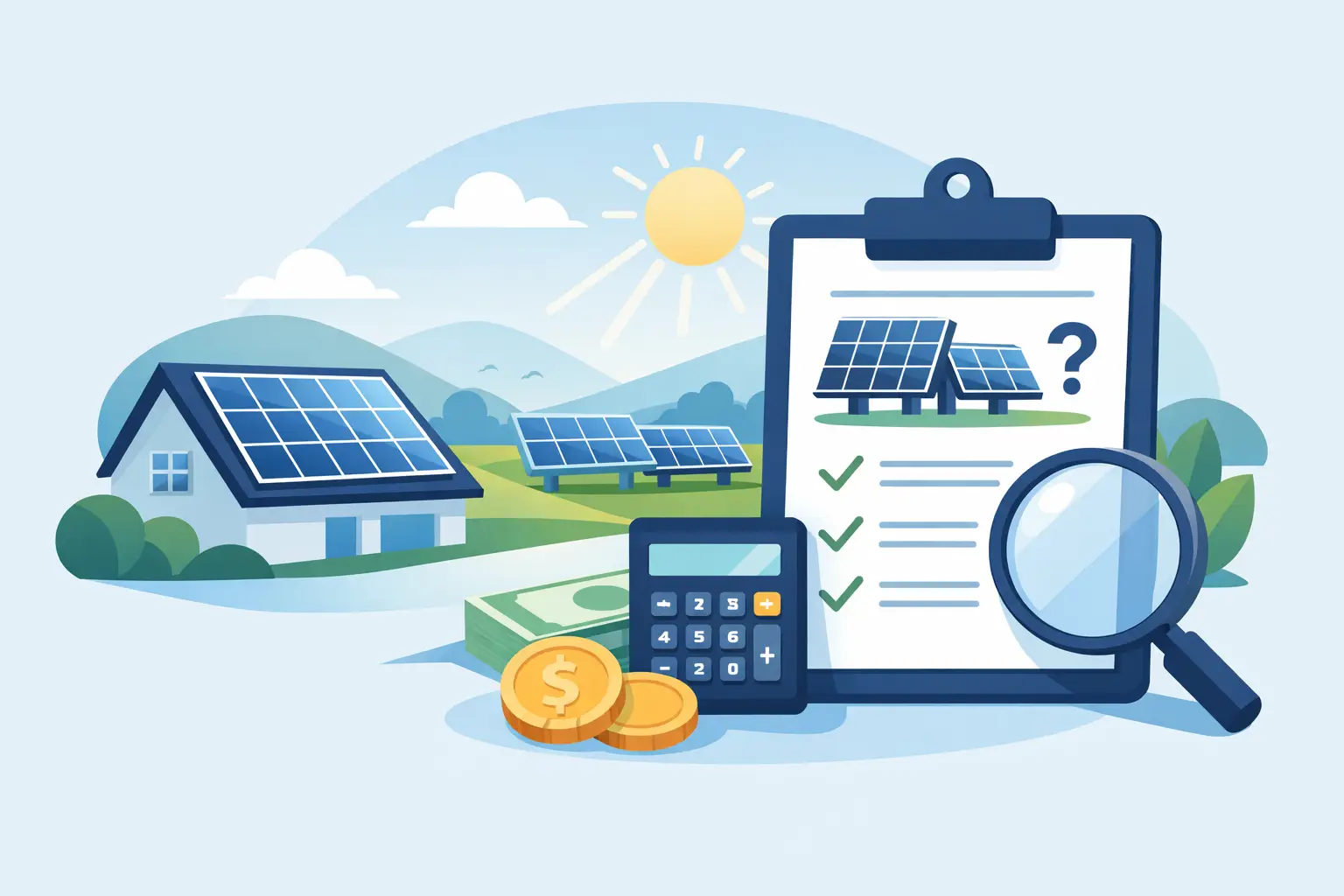
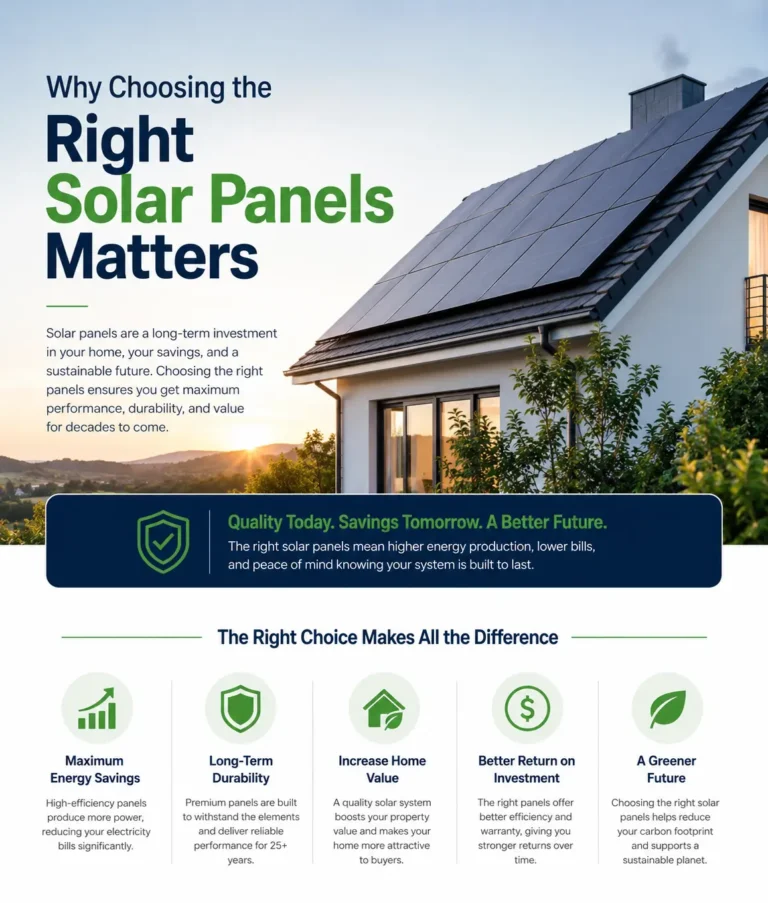
Solar panels are designed to operate for many years, so your decision should consider long-term performance rather than only the upfront purchase price.
A high advertised wattage does not automatically make one panel better than another. The module’s efficiency, dimensions, cell technology, temperature characteristics, degradation specification and warranty should be assessed together.
Important factors to compare
- Exact panel model and current product approval
- Solar panel efficiency
- Panel wattage and physical dimensions
- Cell technology
- Temperature coefficient
- Long-term degradation
- Product warranty
- Performance warranty
- Manufacturer history and scale
- Australian warranty and support arrangements
- Installed system price
Top 10 Solar Panels & Brands to Consider in Australia
The following shortlist covers premium, high-efficiency, performance and value-focused options available in the Australian solar market. It should be used as a comparison guide rather than a fixed ranking because the best panel depends on the individual property and exact product model.
| Solar Panel Brand | Market Position | Best Suited For |
|---|---|---|
| AIKO | Premium / High Efficiency | Roof-constrained homes and homeowners prioritising high module efficiency |
| REC | Premium | Premium residential systems and buyers prioritising long-term performance |
| Maxeon | Premium | High-end residential applications where efficiency and premium specifications matter |
| Jinko Solar | Performance / Value | Residential and commercial installations seeking a strong price-to-performance balance |
| Trina Solar | Performance / Value | Mainstream residential and commercial solar systems |
| LONGi Solar | Performance / Value | High-efficiency residential and commercial applications |
| JA Solar | Value / Mainstream | Cost-effective residential and commercial installations |
| Canadian Solar | Value / Mainstream | Homeowners and businesses seeking established manufacturing scale and value |
| Risen Energy | Value / Performance | Residential and commercial projects where competitive system economics matter |
| Astronergy | Performance / Value | Modern residential and commercial solar projects, subject to model suitability and availability |
Important: Do not select solar panels purely because a manufacturer appears on a “Top 10” list. Compare the exact model proposed in your quotation, including its current specifications, warranty conditions, approval status and suitability for your roof.
1. AIKO Solar Panels
Premium High Efficiency
AIKO Solar Panels Australia
AIKO has become a prominent option in the premium residential solar market, particularly for homeowners who want high module efficiency and modern solar-cell architecture.
High-efficiency panels can be especially useful when usable roof area is limited because more rated solar capacity may be installed within a restricted area.
AIKO may suit:
- Homes with limited usable roof area
- Premium residential solar projects
- High-output solar systems
- Customers prioritising panel efficiency
- Properties where roof-space optimisation is important
Learn more about AIKO solar panels and prices in Australia.
2. REC Solar Panels
Premium Residential
REC Solar Panels Australia
REC is commonly considered towards the premium end of the Australian residential solar market. It may appeal to homeowners who place a high priority on efficiency, product quality and long-term performance characteristics.
Premium panels can make particular sense where roof space is limited or where a homeowner plans to remain in the property for many years and wants to prioritise long-term system quality.
REC may suit:
- Premium home solar systems
- Roof-space-constrained properties
- Customers prioritising long-term performance
- Homeowners comparing premium panel technologies
3. Maxeon Solar Panels
Premium Solar
Maxeon Solar Panels Australia
Maxeon products are associated with the premium solar-panel category and may be considered by homeowners who place a strong emphasis on high efficiency, advanced module construction and premium warranty characteristics.
As with every manufacturer, buyers should compare the exact Maxeon panel model being offered rather than assuming every module from the same brand carries identical specifications.
Maxeon may suit:
- Premium residential installations
- Customers prioritising module efficiency
- Roof-constrained projects
- Long-term homeowners comparing premium technologies
4. Jinko Solar Panels
Performance + Value
Jinko Solar Panels Australia
Jinko Solar is widely used across residential and commercial solar installations and offers a range of modern panel technologies.
For many Australian households, Jinko can provide a practical balance between system performance, modern module technology and installed price.
Jinko Solar may suit:
- Residential solar installations
- 6.6kW, 10kW and larger home systems
- Commercial solar projects
- Customers looking for performance and value
- Battery-ready home energy systems
5. Trina Solar Panels
Performance + Value
Trina Solar Panels Australia
Trina Solar is an established global solar manufacturer offering modules for residential, commercial and larger-scale applications.
For Australian homeowners, selected Trina modules can offer a useful balance between efficiency, modern cell technology, availability and overall installed system cost.
Trina Solar may suit:
- Residential solar installations
- Family homes with moderate or high electricity usage
- Commercial rooftop projects
- Customers comparing recognised global manufacturers
6. LONGi Solar Panels
High-Efficiency Mainstream
LONGi Solar Panels Australia
LONGi is a major global solar manufacturer and has played an important role in the development and large-scale production of modern solar technologies.
LONGi panels may be considered for both residential and commercial installations where efficiency, system economics and recognised manufacturing scale are important.
Always compare the exact LONGi module offered because specifications can vary between different product families and generations.
7. JA Solar Panels
Mainstream Value
JA Solar Panels Australia
JA Solar is a major international solar manufacturer whose panels are used across residential, commercial and utility applications.
Selected JA Solar products can suit customers looking for cost-effective solar equipment from an established global manufacturer.
JA Solar may suit:
- Residential rooftop solar
- Larger home solar systems
- Commercial installations
- Value-conscious solar buyers
8. Canadian Solar Panels
Established Value
Canadian Solar Panels Australia
Canadian Solar is a long-established global manufacturer offering solar modules for residential and commercial applications.
Selected Canadian Solar products may suit homeowners and businesses looking for recognised manufacturing scale, competitive system pricing and mainstream solar technology.
As always, compare the exact model, efficiency, warranty and technical specification included in your solar quotation.
9. Risen Energy Solar Panels
Value + Performance
Risen Solar Panels Australia
Risen Energy is another established solar manufacturer with products used across residential, commercial and larger solar projects.
Selected Risen modules can be worth comparing where project economics, module performance and overall installed system value are important considerations.
Product availability and exact specifications should be confirmed when obtaining your quotation.
10. Astronergy Solar Panels
Modern Solar Technology
Astronergy Solar Panels Australia
Astronergy is another manufacturer Australian solar buyers may encounter when comparing modern module technologies.
As with every brand in this guide, suitability depends on the exact model, current product approval, efficiency, warranty, roof layout, system design and installed price.
A panel should therefore be assessed as part of the complete solar system rather than in isolation.
N-Type Solar Panels: Why They Matter in 2026
One of the most important developments in modern solar-panel technology has been the increasing adoption of N-type solar cells.
Different manufacturers use different cell and module architectures, but modern technologies may include N-type TOPCon, heterojunction designs and back-contact architectures.
⚡
Higher Efficiency
Higher module efficiency can help homeowners install more solar capacity where usable roof area is limited.
📉
Degradation
Long-term degradation characteristics influence how much rated performance a panel is warranted to retain over time.
🏠
Roof Optimisation
Modern high-efficiency modules can be particularly useful for homes where only a limited portion of the roof is suitable for solar.
Do not choose a panel simply because it says “N-Type”. Compare the complete specification: efficiency → degradation → temperature characteristics → warranty → Australian support → system design → installed price.
What Is Solar Panel Efficiency?
Solar panel efficiency describes how effectively a module converts the sunlight reaching its surface into electrical energy under standard test conditions.
Higher efficiency can be particularly valuable where roof space is limited because it allows more rated capacity to be installed within a given area.
However, efficiency should not be viewed in isolation. A slightly lower-efficiency panel with an appropriate warranty, good system design and attractive installed price may provide a better overall solution for a property with ample roof space.
Why Temperature Performance Matters in Australia
Solar panels are tested under standard laboratory conditions, but real Australian rooftops can become considerably hotter than those test conditions.
Solar-panel output changes as cell temperature rises, which is why the temperature coefficient in the manufacturer’s datasheet is worth comparing when evaluating different modules.
This does not mean that a single temperature figure should determine your purchase. It should be considered alongside efficiency, degradation, warranty, roof design and overall system performance.
Approved Solar Panels in Australia
Before installation, confirm that the exact solar panel model proposed for your system meets the applicable Australian product and installation requirements.
Do not assume that every module sold by a familiar manufacturer automatically has identical specifications or approval status. Manufacturers frequently offer multiple models, and product ranges change over time.
Practical buying sequence:
Product Approval → Technical Quality → Warranty → Australian Support → Roof Suitability → Inverter Compatibility → Complete Installed Price
Premium vs Value Solar Panels: Which Is Better?
The most expensive solar panel is not automatically the best financial choice for every Australian household.
| Category | Typical Priorities | May Suit |
|---|---|---|
| Premium Panels | High efficiency, premium specifications, strong long-term performance characteristics | Limited roof space, premium homes and customers prioritising high-end equipment |
| Performance / Value | Balance of modern technology, efficiency and installed cost | Most mainstream Australian residential solar installations |
| Value Panels | Competitive system economics from established manufacturers | Homes with sufficient roof space and budget-conscious projects |
For many households, established brands such as Jinko Solar, Trina Solar, LONGi, JA Solar and Canadian Solar can offer a practical balance between technology, efficiency and system price.
Which Solar Panel System Size Is Right for Your Home?
Choosing quality solar panels is only one part of designing a good system. You also need an appropriate total system capacity.
| Solar System Size | Typical Application | Learn More |
|---|---|---|
| 6.6kW Solar | Smaller and medium-sized households with moderate electricity consumption | Residential Solar |
| 10kW Solar | Larger family homes, higher electricity consumption, batteries and EV plans | 10kW Solar System |
| 13kW–13.2kW Solar | Large homes, pools, electric appliances, EV charging and substantial daytime loads | 13kW Solar System |
The correct system size should be based on your electricity consumption, available roof area, network requirements, future battery plans and expected EV charging rather than choosing capacity solely from an advertised package.
Should You Install Solar Panels With a Battery?
Solar panels and battery storage perform different roles. Solar panels generate electricity during daylight hours, while a compatible home battery can store suitable surplus solar electricity for use later.
Whether battery storage makes sense depends on your daytime and evening consumption, available solar surplus, electricity tariffs, backup requirements and budget.
Some households install solar first and add a battery later. Others choose an integrated solar and battery system from the beginning.
If you expect to install a battery in the future, discuss this with your solar designer before choosing your inverter and overall system architecture.
Explore solar and battery packages or compare solar battery prices.
The Best Solar Panel Still Needs a Good System Design
Buying a highly rated solar panel does not automatically guarantee a high-performing solar system.
Panel positioning, shading, inverter selection, string design, mounting, cable routing, switchboard requirements and installation workmanship all contribute to the finished system.
☀️
Solar Panels
Choose the exact module based on efficiency, dimensions, technology, warranty and roof suitability.
⚡
Solar Inverter
The inverter should be appropriately matched to the panel array, electricity supply and future battery plans.
📐
System Design
Panel orientation, shading and usable roof area should influence how the array is configured.
Choosing Solar Panel Installers in Australia
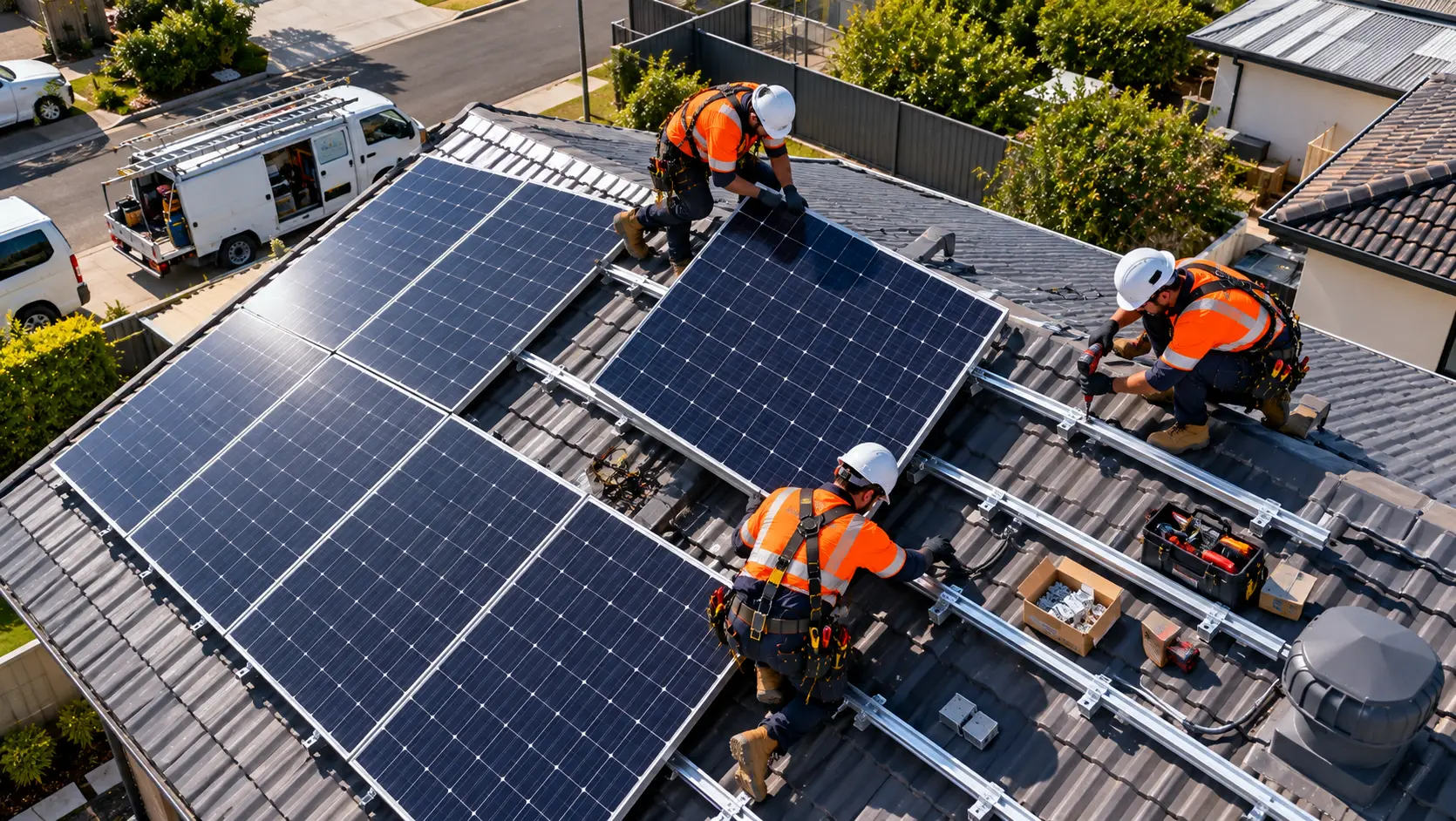
The installer and system designer are just as important as the solar panel brand. Professional solar panels installers should assess the property before recommending equipment.
A quality proposal should identify the exact panel model, number of panels, total array capacity, inverter model, proposed roof layout and important warranty information.
Questions to ask your solar installer
- What is the exact solar panel model?
- Why is this panel suitable for my roof?
- What is the module efficiency?
- What product warranty applies?
- What performance warranty applies?
- What inverter is included?
- How much solar generation is estimated?
- How has roof shading been considered?
- Can the system support future battery storage?
- What workmanship warranty applies?