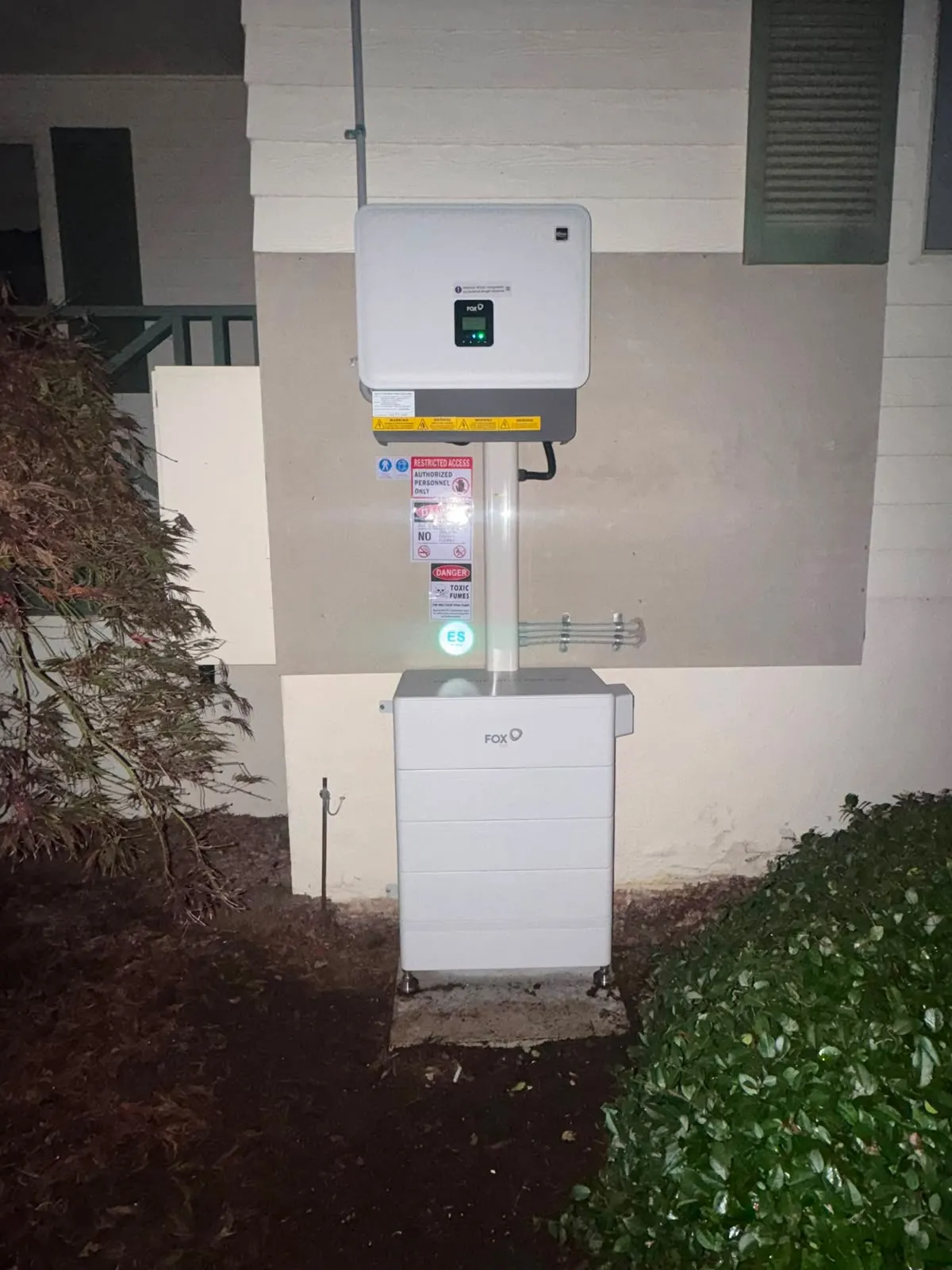
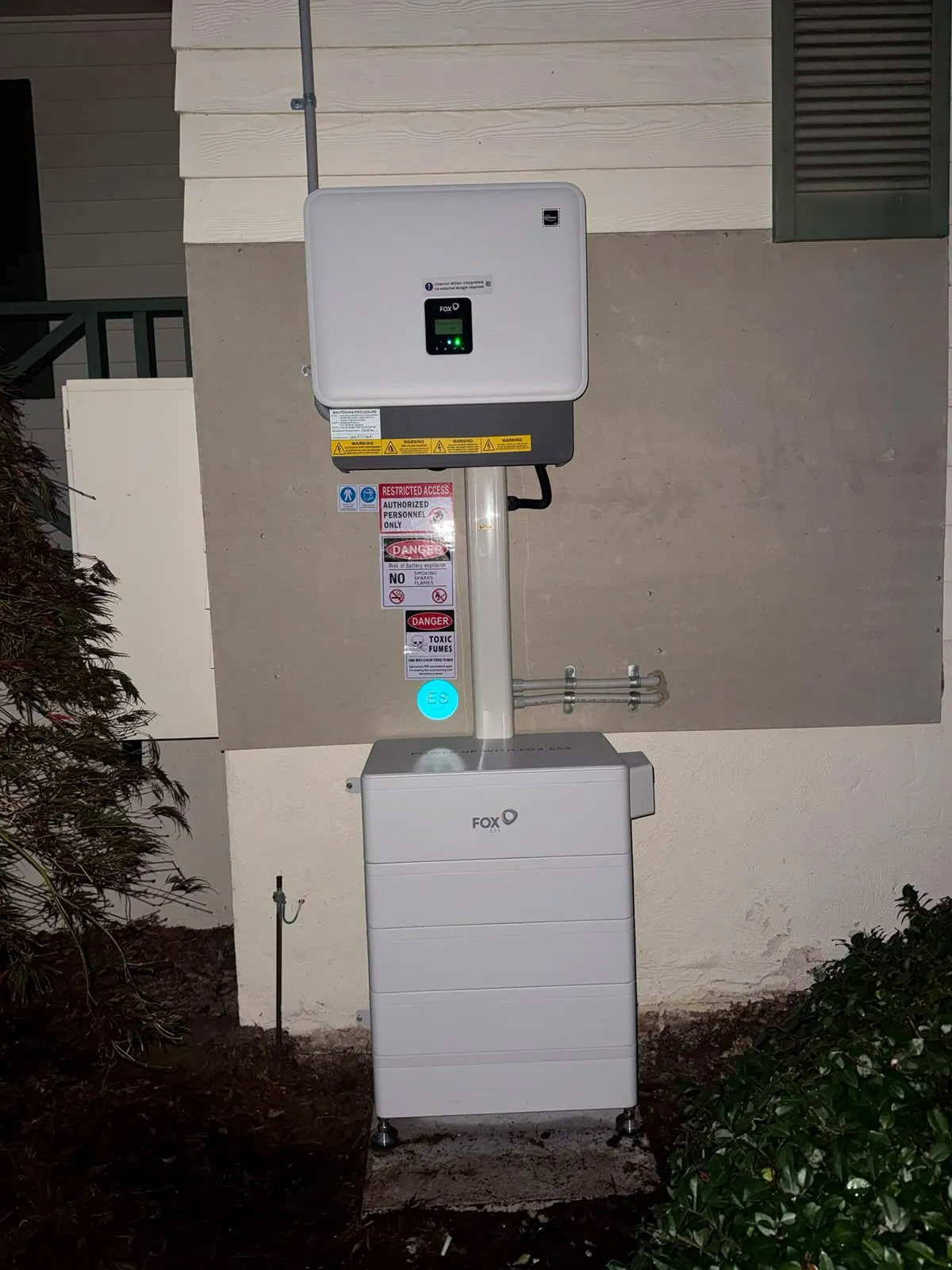
A battery stores direct current, so the phrase AC versus DC batteries can be misleading. What you are really comparing is how the battery connects to your solar system, switchboard and the electricity grid. That connection affects efficiency, backup capability, upfront cost and how easily the system can grow over time.
For Sydney and NSW property owners, there is no universal winner. An AC-coupled battery is often a practical choice for adding storage to an existing solar system. A DC-coupled battery can be a highly efficient option when solar and storage are designed together from the start. The right design comes down to your site, electricity use, existing equipment and plans for the future.
What is an AC-coupled battery?
An AC-coupled battery connects on the alternating-current side of your electrical system. It has its own battery inverter, which changes the battery’s stored DC electricity into AC power your home or business can use.
Your rooftop panels still generate DC electricity. Your existing solar inverter converts that solar power to AC for your property, and the battery system then converts surplus AC back to DC for storage. When the battery discharges, it converts the stored DC power back to AC again.
This may sound like extra work, and it is. Each conversion creates a small energy loss. However, AC coupling offers a major practical advantage: it can usually be installed alongside many existing solar systems without replacing the original solar inverter.
That makes AC-coupled storage particularly relevant for homeowners who installed solar several years ago and now want to use more of their own generation after sunset. It can also suit commercial sites with a sound, well-performing solar array that needs battery storage rather than a complete redesign.
What is a DC-coupled battery?
A DC-coupled battery connects directly to the DC side of the solar system, usually through a compatible hybrid inverter. Solar generation can charge the battery before the electricity is converted to AC for your switchboard.
With fewer conversion stages between the panels and battery, a DC-coupled design can capture and store solar energy more efficiently. This benefit is most relevant where the battery will be charged regularly from rooftop solar and where maximising self-consumption is a priority.
A DC-coupled system is commonly selected for a new solar and battery installation. The solar array, hybrid inverter and battery are specified as one coordinated system, with capacity, export settings and backup functions considered during the initial design.
The trade-off is compatibility. If your property already has a standard string inverter, moving to DC coupling may require replacing it with a hybrid inverter or adding other equipment. If the current inverter is still early in its warranty life and performing well, that additional cost may not represent the best value.
AC versus DC batteries: the key differences
The main technical difference is the path electricity takes. In an AC-coupled setup, surplus solar power generally moves from DC at the panels to AC through the solar inverter, then back to DC in the battery, before returning to AC when used. A DC-coupled setup transfers solar DC to the battery more directly, then converts it to AC when your property needs power.
That gives DC coupling an efficiency advantage on paper, particularly for solar-to-battery charging. But efficiency should not be assessed in isolation. A battery that is slightly less efficient but sized correctly, installed safely and programmed around your usage can deliver stronger real-world value than a more efficient system that does not suit the property.
AC coupling is generally more flexible for retrofits. It can work independently of the existing solar inverter and may allow owners to retain their established solar equipment. It is also often straightforward to add capacity with compatible AC battery products, subject to switchboard capacity, site layout and network requirements.
DC coupling is often the cleaner solution for a new installation. A single hybrid inverter can manage solar production, battery charging and property consumption in one integrated design. It may reduce equipment duplication and can create a tidy pathway for a solar-first energy strategy.
Efficiency matters, but so does battery behaviour
Round-trip efficiency measures how much electricity remains after charging and discharging a battery. Conversion losses are one reason DC-coupled systems can perform well when most battery charging comes directly from solar.
However, the result on your bill depends on more than round-trip efficiency. Your daytime consumption, evening load, solar array size, export limit, tariff structure and battery control settings all matter. A household that exports heavily at midday and uses substantial power after dark may see strong battery value from either configuration.
For example, a family with an existing solar system may choose AC coupling to avoid replacing a functioning inverter. Although the energy path involves more conversion, the lower disruption and retained equipment can make the project financially sensible. By contrast, a new build with a large solar array, electric heating and planned EV charging may gain more from a DC-coupled hybrid system designed around those loads from day one.
Backup power is a separate design decision
Many people assume every battery keeps the whole property running during a blackout. That is not automatically the case. Backup capability depends on the selected battery and inverter, the backup gateway or changeover equipment, the circuits nominated for backup, and compliant installation design.
A basic battery may reduce grid purchases in normal operation but not provide power during an outage. A backup-enabled system can supply selected essential circuits, such as lighting, refrigeration, internet equipment and selected power points. Whole-home backup may be possible on some sites, but it requires careful load assessment, particularly where there are large air-conditioners, pool pumps, ovens, machinery or multiple EV chargers.
Both AC- and DC-coupled systems can be designed for backup, but their capabilities vary by brand and model. Battery capacity is only one part of resilience. Battery output power, surge capability and the way the system manages solar during an outage are equally important.
For NSW properties, backup design must also protect electrical workers and the grid. The system needs to isolate appropriately during an outage rather than energising external network lines. This is safety-critical work, not an optional add-on.
Cost and future expansion
An AC-coupled battery may offer the more cost-effective path when you already own a suitable solar system. You retain the existing inverter, add compatible storage equipment and avoid removing technology that still has useful life.
A DC-coupled battery can make stronger financial sense when solar is new, the existing inverter is due for replacement, or the site needs an integrated design from the outset. It can also be attractive where high solar self-consumption is the central objective.
Future expansion deserves attention before equipment is chosen. Ask whether battery capacity can be increased later, whether additional solar panels can be added, and whether the inverter has sufficient capacity for the planned system. A household may add an EV within a few years. A business may extend operating hours, install refrigeration or add electric fleet charging. These changes can alter the battery case quickly.
It is also worth checking physical space, cable routes, switchboard condition and network export constraints early. These site factors can affect the design more than a product comparison chart suggests.
Choosing the right battery connection for your property
For an existing solar home or business, AC coupling is often the first option worth assessing. It can add storage with less change to your established solar equipment, provided the system is compatible and the switchboard can safely accommodate the upgrade.
For a new solar and battery project, DC coupling deserves serious consideration. It can provide an efficient, coordinated system with fewer conversion steps between solar generation and stored energy.
The decision should be based on a documented assessment of your consumption profile, solar production, current electrical infrastructure, tariff, backup expectations and expansion plans. Premium equipment matters, but correct system design matters just as much. A detailed quotation should clearly show what is included, what circuits are backed up, expected system operation and any electrical upgrade work required.
Sydpro Solar Solutions approaches battery design as part of the wider energy system, not as a box added beside the switchboard. With accredited solar expertise and Level 2 electrical capability, the focus is on safe integration, transparent scope and a system that continues to suit the property as energy needs change.
A well-chosen battery should make your solar work harder for you after the sun goes down. Start with the connection type that fits your current equipment and future plans, then make sure the final design is built around how your property actually uses power.