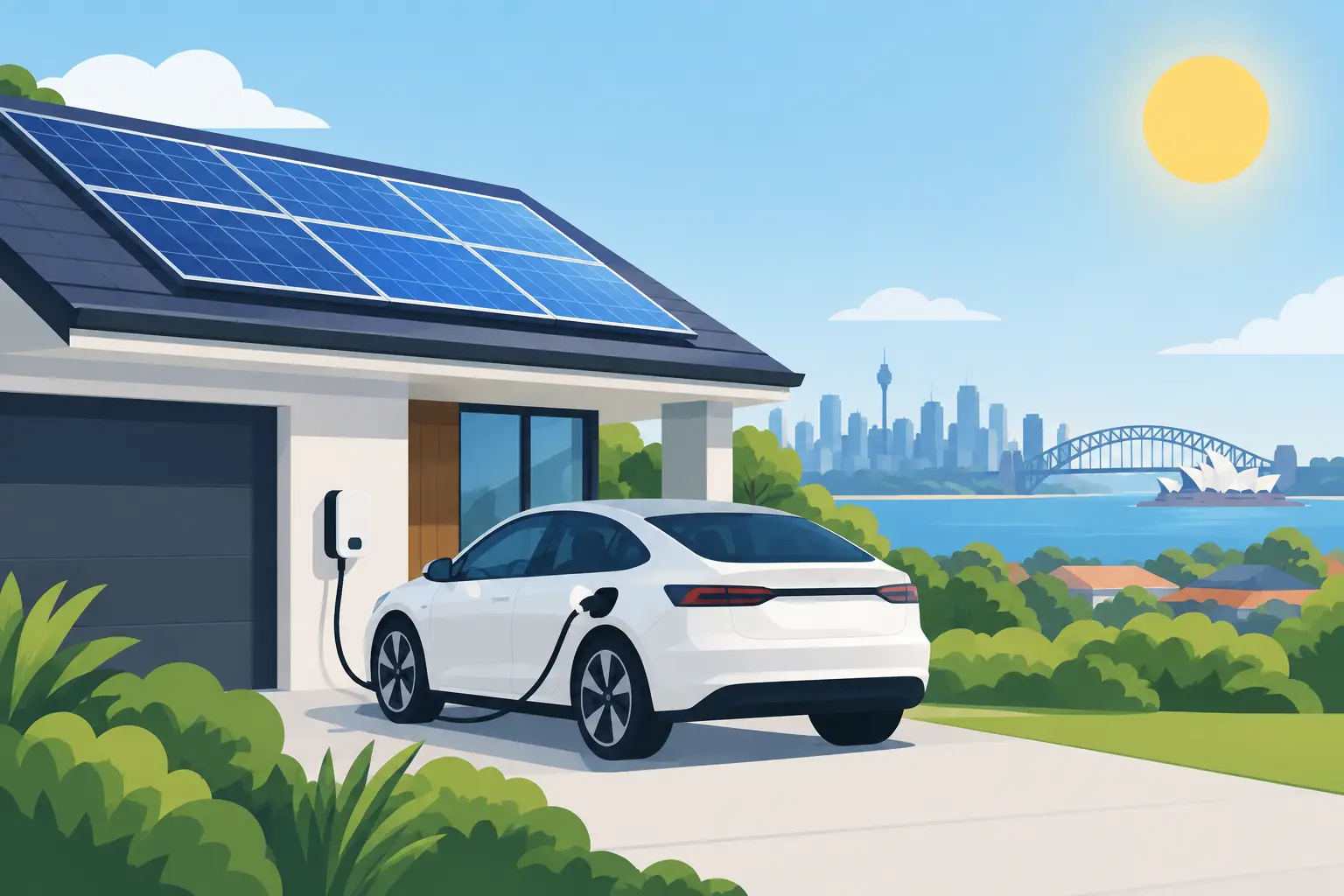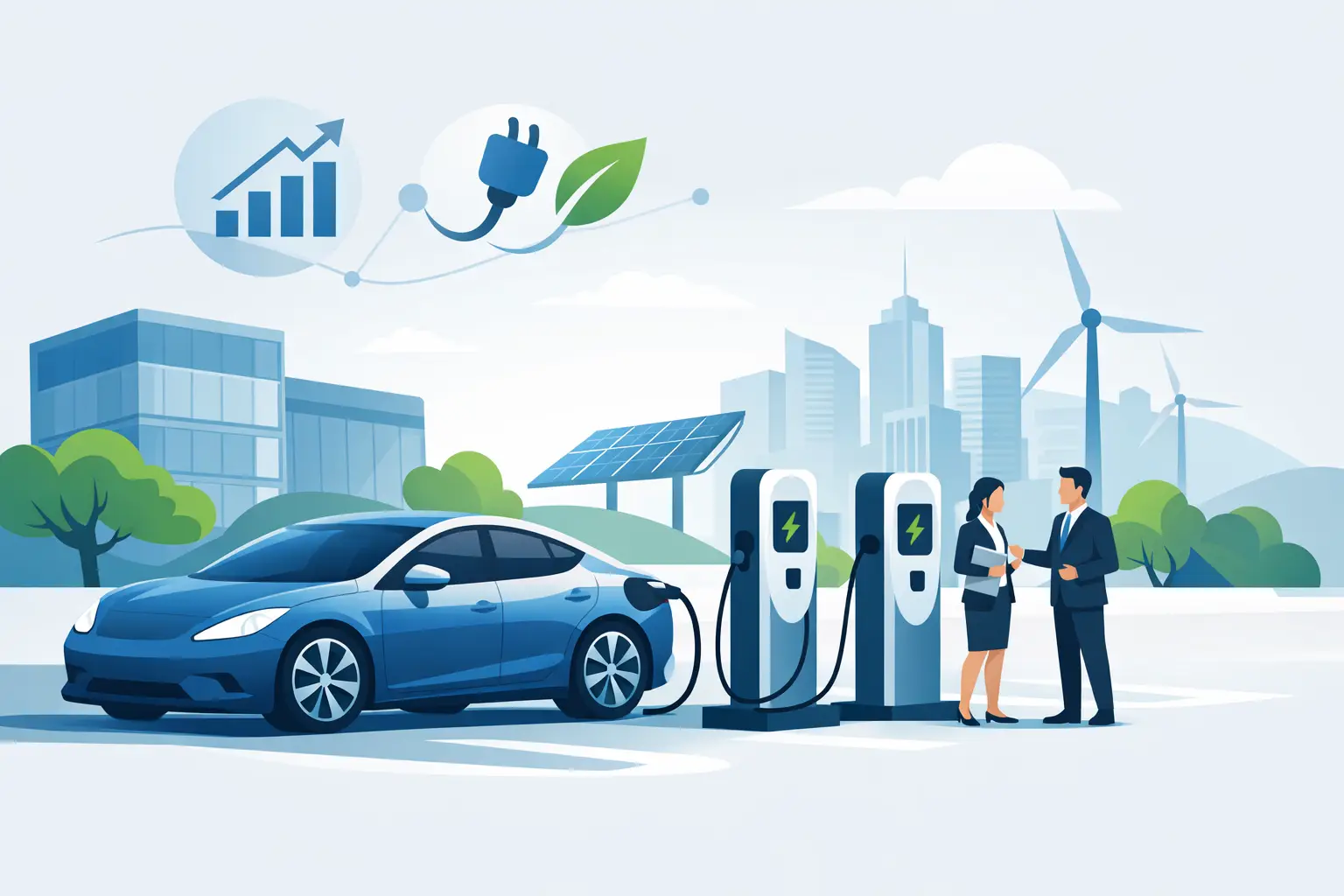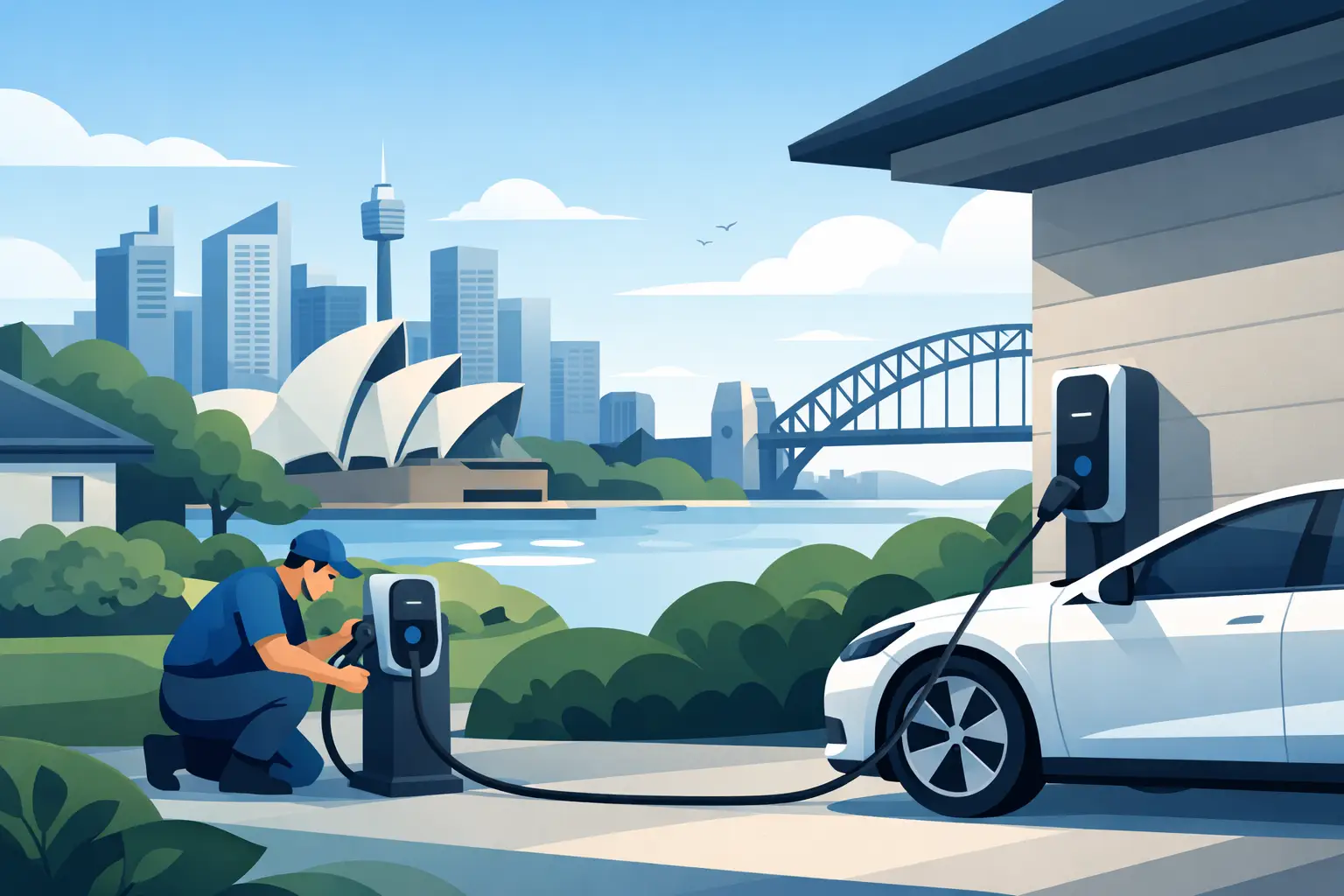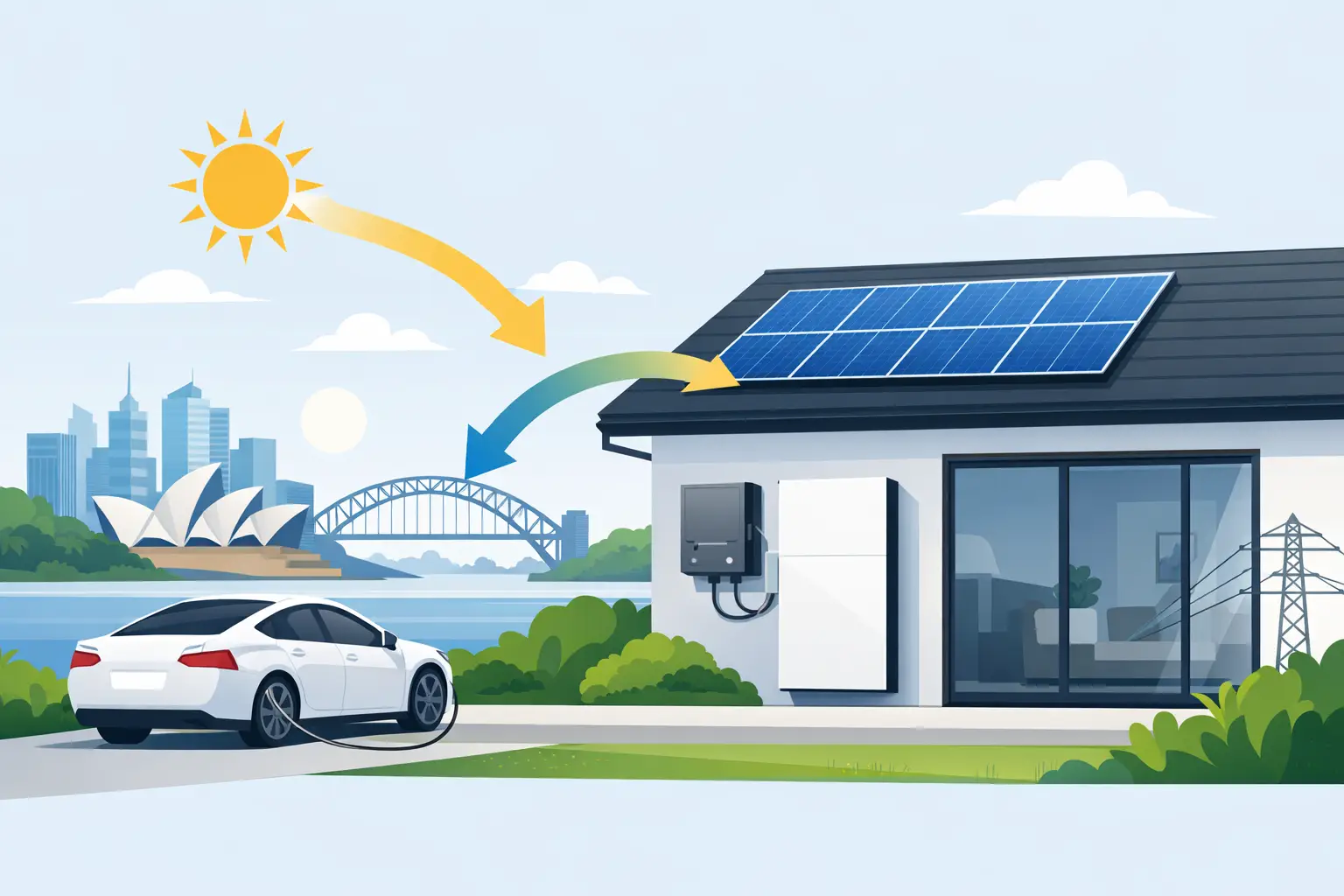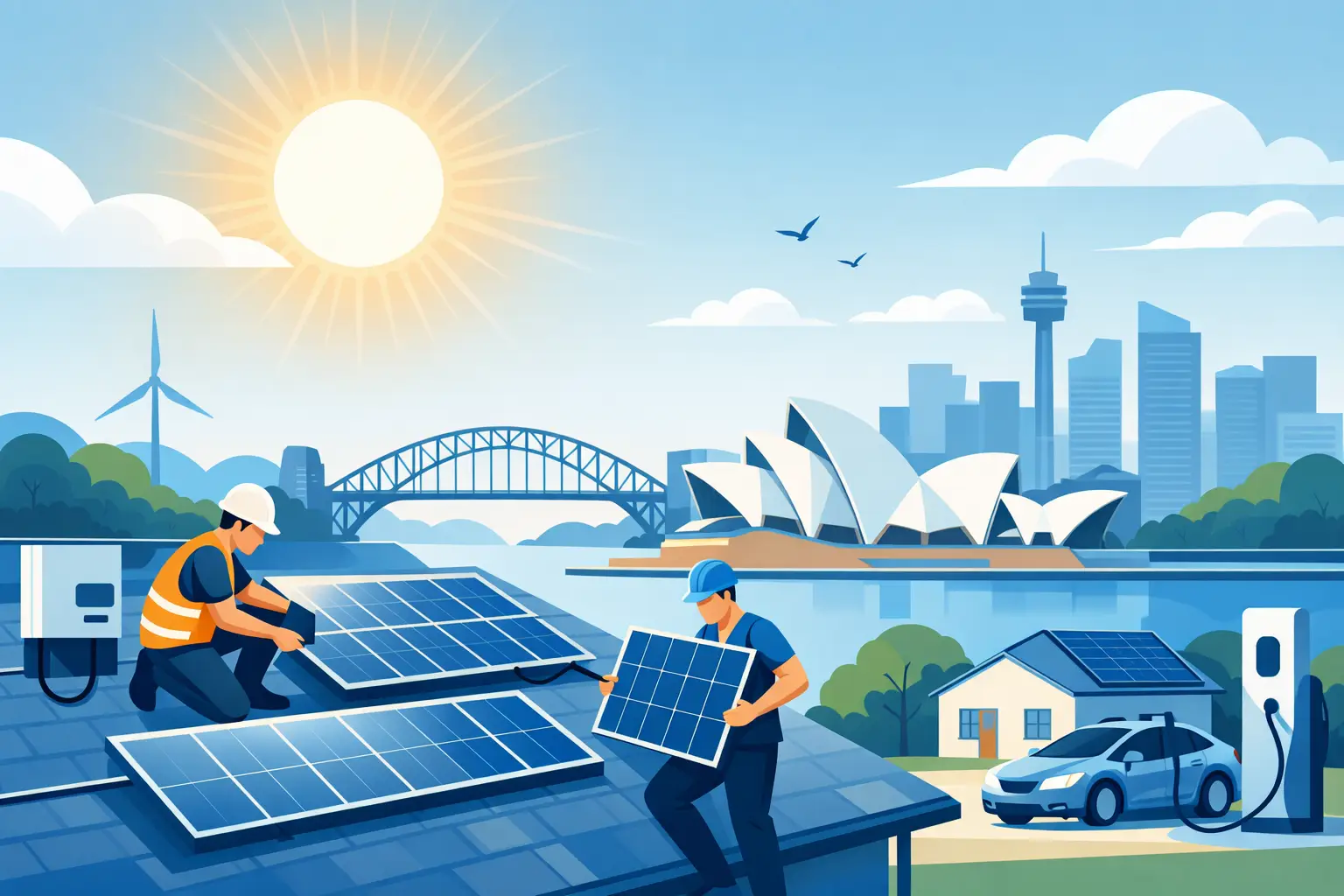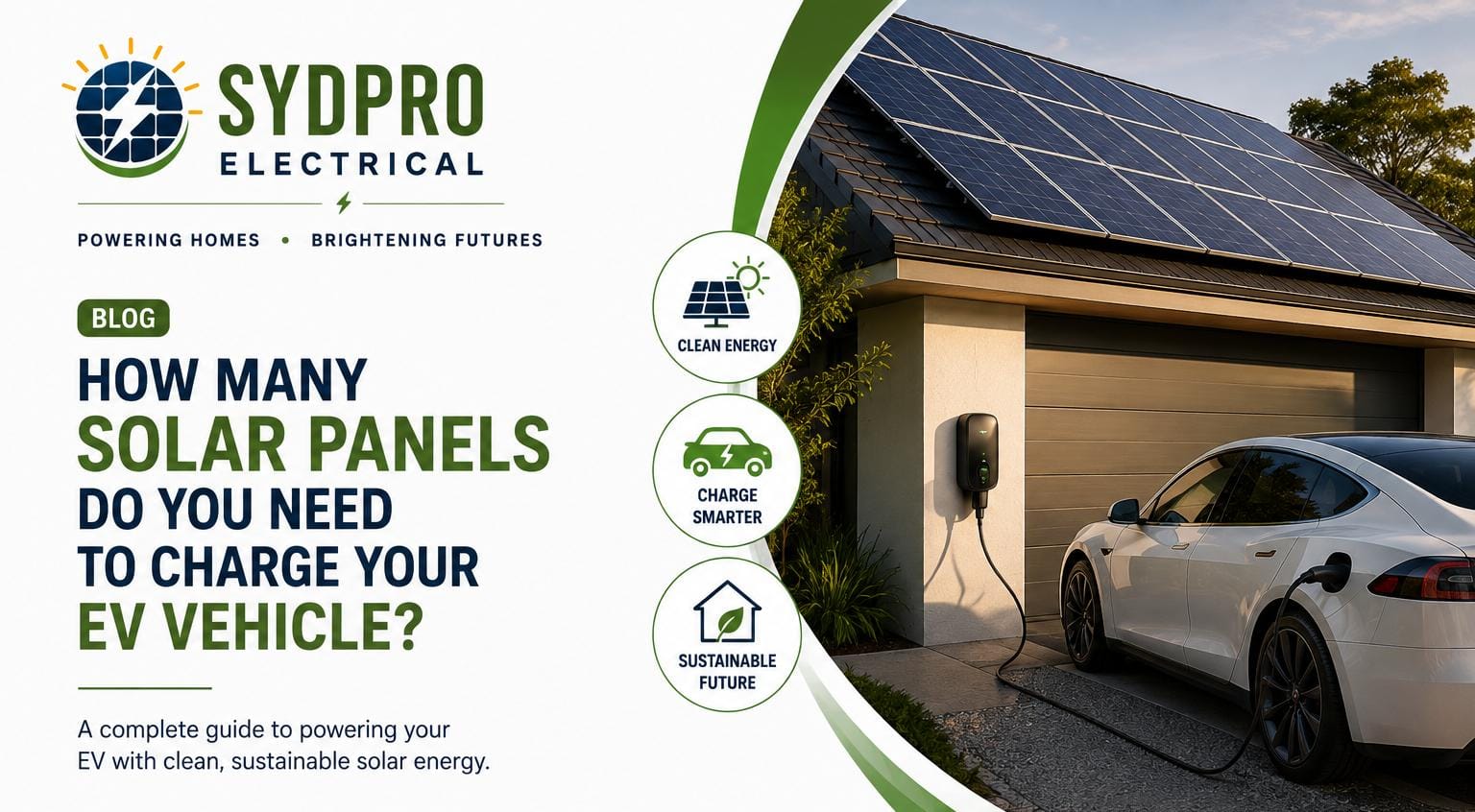
Electric cars are everywhere now, and once you’ve got one, the next thought lands pretty quickly: why am I paying for grid power to charge this thing when the sun’s free? Charging your EV from your own rooftop solar is one of the most satisfying wins in the whole home-energy game. You’re effectively driving on sunshine.
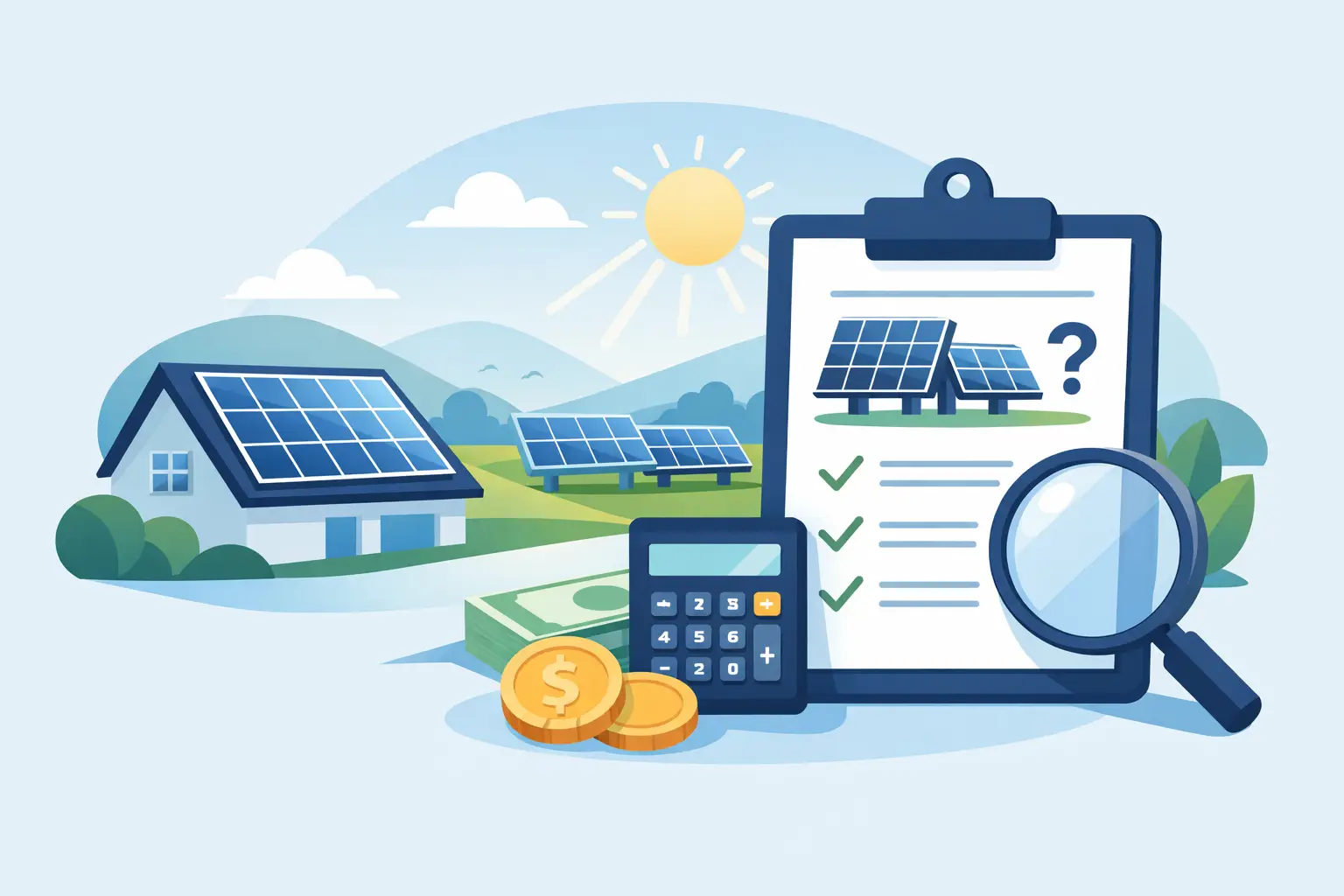
But how many panels does it actually take? The honest answer is “it depends,” but it depends on things you can work out fairly easily. Let’s walk through the simple maths so you can size it for your own driving, then cover the catch that trips most people up.
The simple way to work it out
There are really just two numbers you need: how much energy your car uses, and how much energy your solar makes. Get those, and the rest is arithmetic.
Step 1: How much energy does your driving use?
Most electric cars in Australia use somewhere in the range of 15 to 20 kWh of energy per 100km. Bigger, heavier EVs sit at the higher end; small efficient ones at the lower end.
Now, how far do you drive? Australian Bureau of Statistics figures put the average passenger vehicle at somewhere around 11,000 to 14,000km a year, which works out to roughly 30 to 38km a day.
Put those together for a typical driver:
~33km/day × ~17 kWh per 100km ≈ about 5.6 kWh of charging a day (illustrative example)
So an average-driving household needs to find roughly 5 to 6 kWh a day to keep the car topped up from solar. Heavy drivers doing big daily kilometres will need more; someone who mostly works from home and pops to the shops, less.
Step 2: How much energy does a panel make?
As a rough rule of thumb, every 1kW of solar panels produces somewhere around 4 kWh of electricity a day, averaged across the year in much of Australia. Actual output varies significantly by state, orientation, shading and season. A modern panel these days is typically in the 430–450 watt range.
So each 1kW of solar (roughly two to three panels) makes about 4 kWh a day on average.
Step 3: Do the sum
To cover our example 5.6 kWh a day of car charging, you’d need roughly:
5.6 kWh needed ÷ 4 kWh per kW ≈ about 1.4 kW of solar dedicated to the car (illustrative example)
That’s only around three to four extra panels to charge an average EV for average driving. Surprising, isn’t it? People often expect to need a roof full of panels just for the car, when in reality it’s a fairly modest addition on top of your household’s normal usage.
The key word there is on top of. Those panels are in addition to what your home already uses, so the practical takeaway is usually this: if you have an EV, or you’re planning one, size your solar system bigger than you would for the house alone.
The catch nobody mentions
Here’s the bit that changes everything, and it’s got nothing to do with how many panels you have.
Your solar makes most of its power in the middle of the day. But most people’s cars aren’t home in the middle of the day, they’re at work, or dropping kids around, or parked at the shops. And a lot of people plug the car in when they get home in the evening, exactly when the sun’s going down and your panels have clocked off.
If you charge your EV at 7pm from an empty solar system, you’re not driving on sunshine at all. You’re buying grid power. All those carefully calculated panels are sitting idle in the dark.
So the real question isn’t just “how many panels,” it’s “how do I get my solar into my car.” And there are a few good answers.
How to actually charge your EV from solar
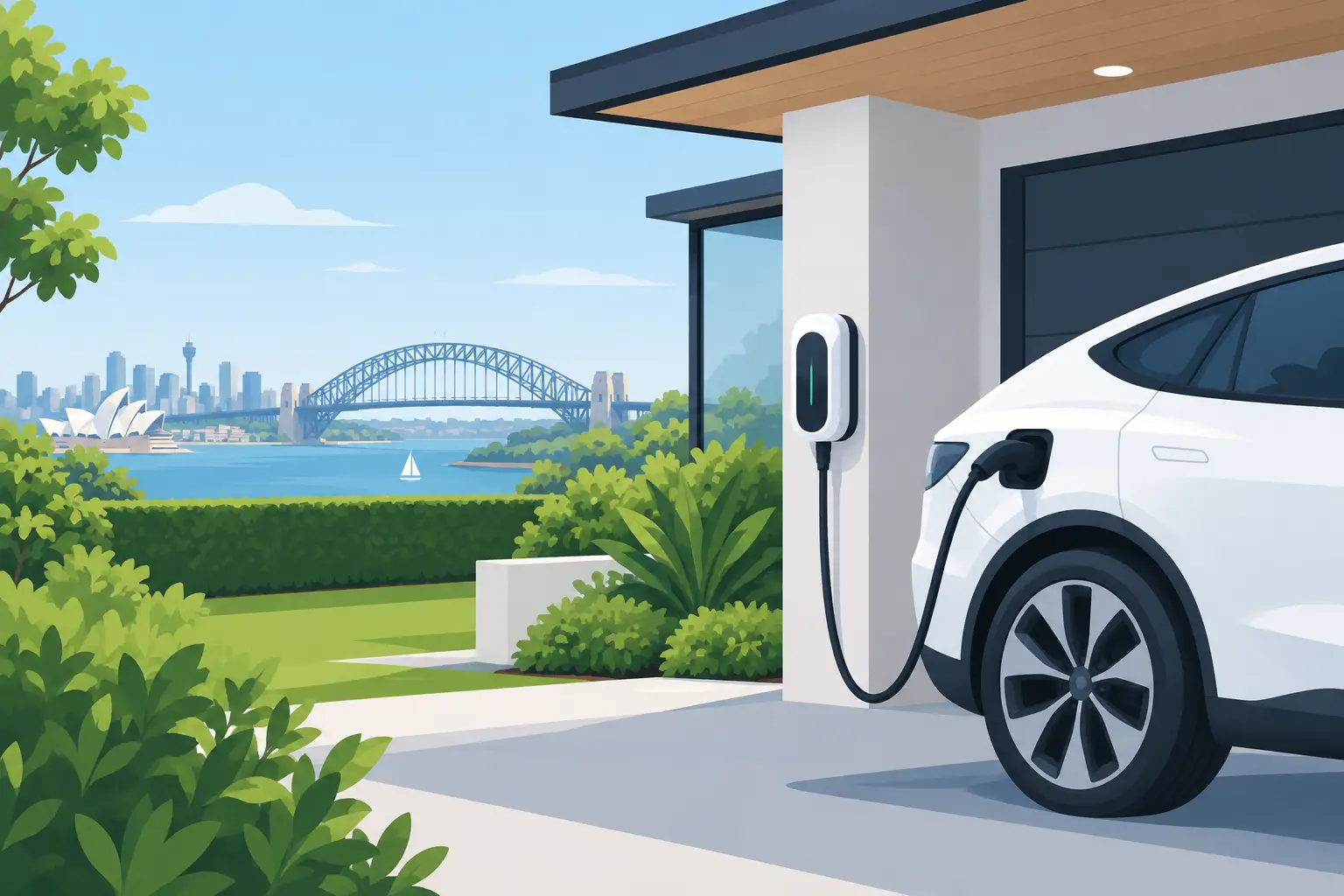
Charge during the day. If the car is home during daylight (you work from home, or it’s the second car), simply plugging in during the day lets it drink straight from your panels. Easiest option of all.
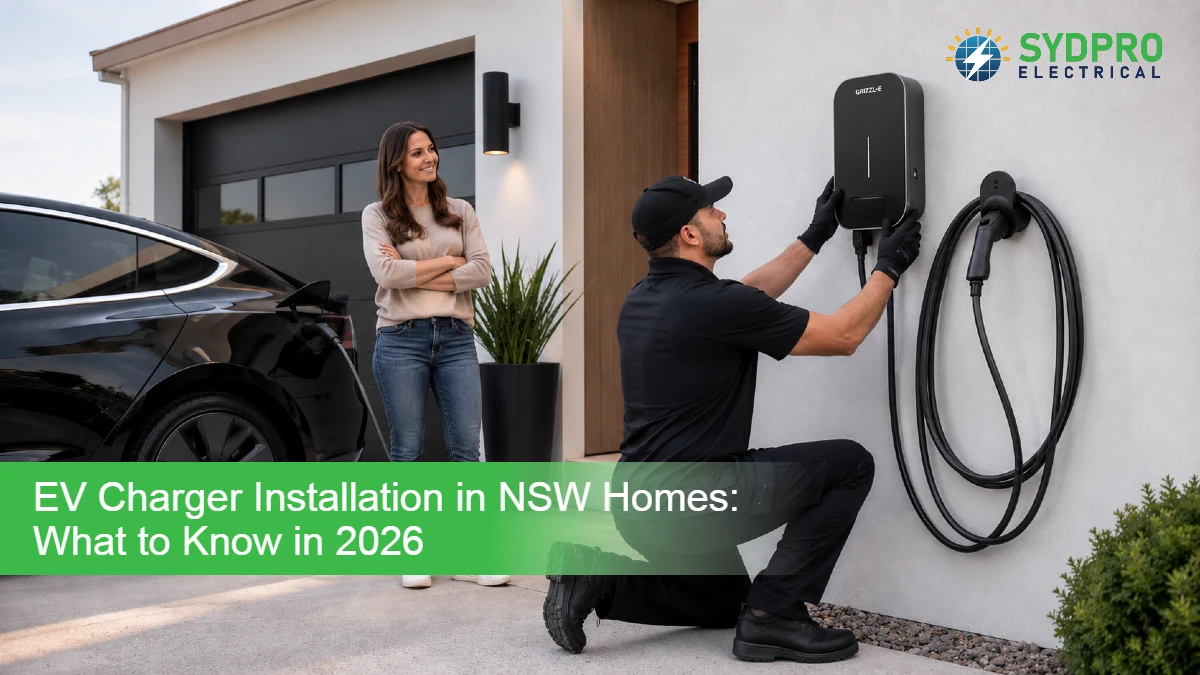
Use a smart EV charger. A smart charger with “solar diversion” or “solar matching” only sends your surplus solar to the car, so it charges from the sunshine you’d otherwise export for a low feed-in rate. Some can ramp the charge up and down to follow the clouds. ⚠ Feature availability varies by charger — verify.
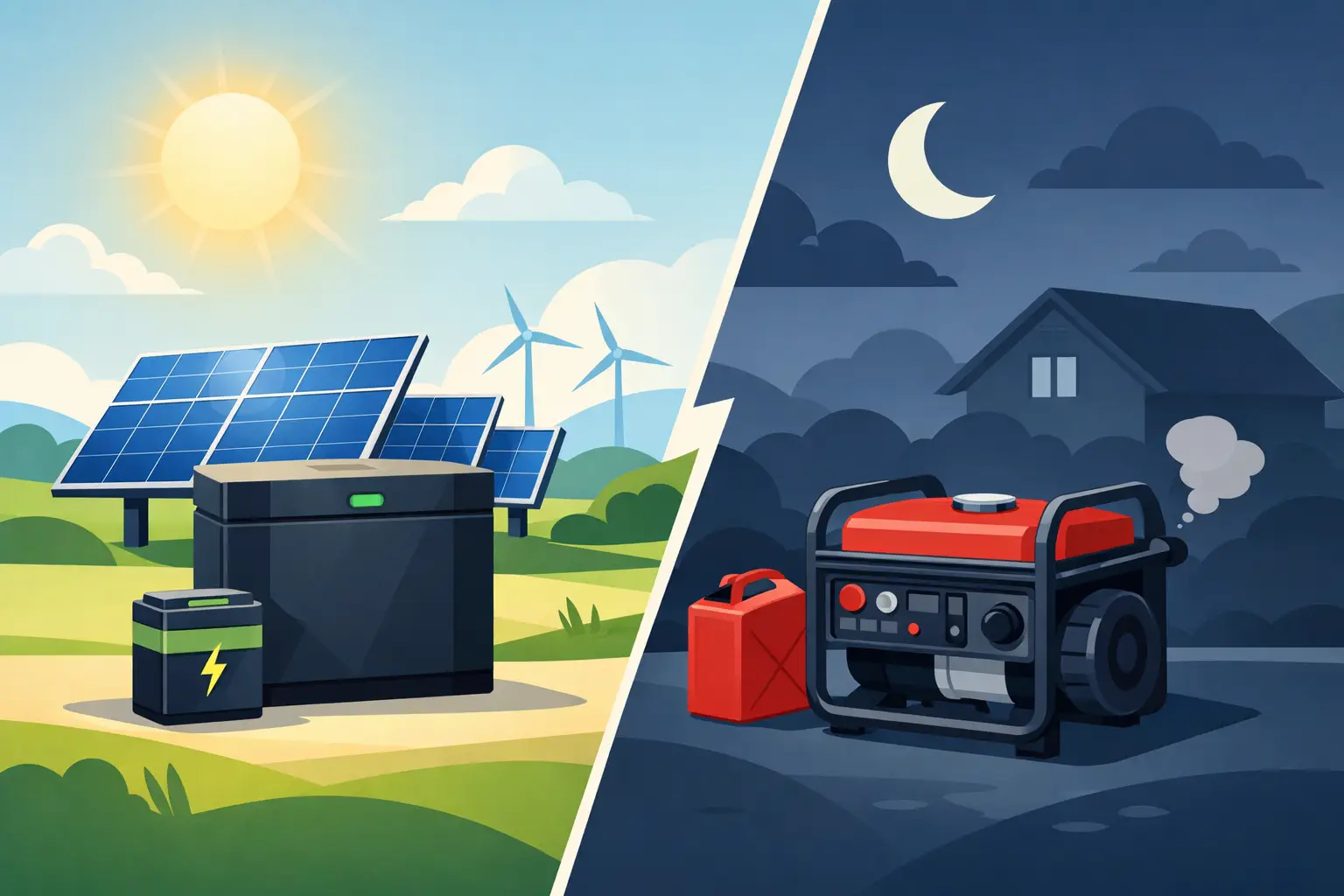
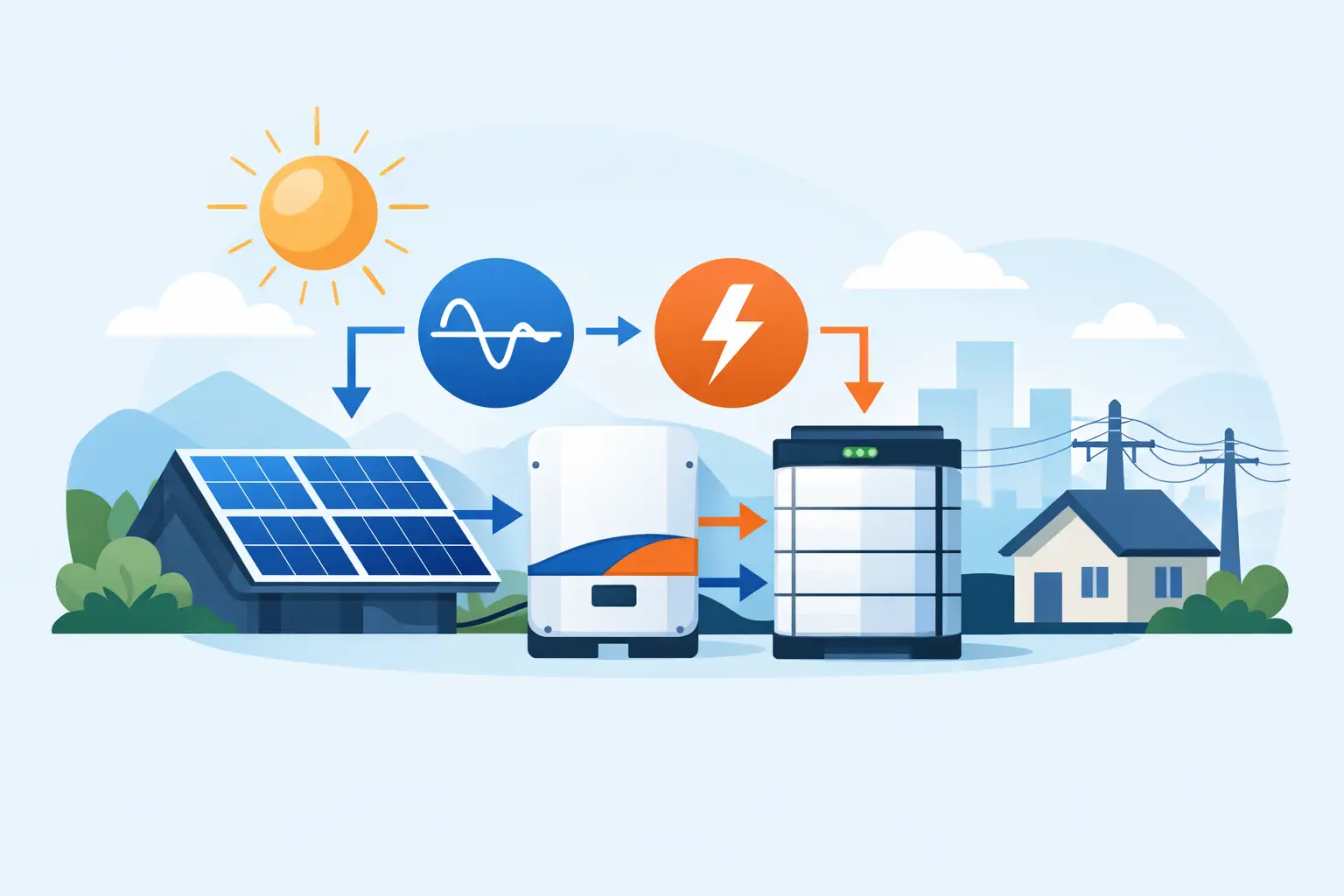
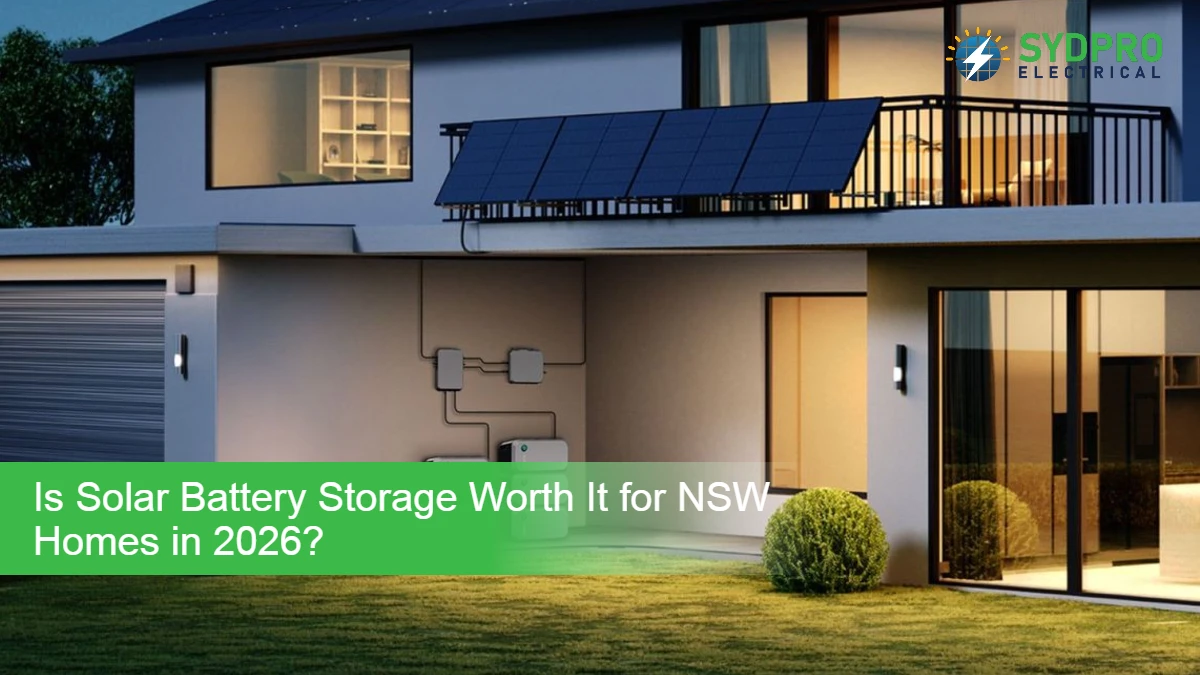
Add a home battery. This is the one that suits the most households. A battery stores your daytime solar and lets you charge the car in the evening from that stored energy instead of the grid. If the car’s never home during the day, a battery is often what makes solar EV charging genuinely work. It’s the same logic behind running the rest of your home on stored solar at night.
Use cheap or free daytime power. With time-of-use plans and the new midday free-power offers rolling out in 2026, there’s a growing case for scheduling car charging into the cheapest window of the day even when you can’t use solar directly.
If you want to go a step further, the technology to run your home off your car battery is also emerging. We covered that in our guide to using your EV as a home battery, which is worth a look if you’re curious about where this is all heading.
Need a Trusted Electrician or Solar Expert?
Whether you’re planning a solar installation, battery storage system, EV charger, switchboard upgrade, or general electrical work, the Sydpro Electrical team is here to help.
📞 Call: 0499 656 366
🌐 Website: https://sydproelectrical.com.au�
📍 Service Area: Sydney & Surrounding Areas, NSW
✅ Fully Insured & Qualified
✅ Inhouse Electricians – No Sub Contractors
✅ NETCC Approved Seller
✅ Solar Accreditation Australia (SAA) Accredited
Get in touch today for a free quote or book your service online with Sydpro Electrical.